Advertisements
Advertisements
प्रश्न
Given along is a diagram of a human blood smear. Study the diagram and answer the questions that follow:
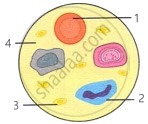
- Name the components numbered ‘1’ to ‘4’.
- Mention two structural differences between the parts ‘1’ and ‘2’.
- Name the soluble protein found in part ‘4’ which forms insoluble threads during clotting of blood.
- What is the average life span of the component numbered ‘1’?
- Component numbered ‘1’ do not have certain organelles but are very efficient in their function. Explain.
विस्तार में उत्तर
Advertisements
उत्तर
- 1: RBC/Erythrocytes
2: WBC/Leucocytes
3: Platelets/Thrombocytes
4: Plasma - Two structural differences between parts 1 (RBC) and 2 (WBC) are:
RBC WBC Biconcave disc-like Irregular, Amoeboid Nucleus absent Nucleus present - Fibrinogen
- The average lifespan of the component numbered 1 (i.e., RBC) is 120 days.
- The component numbered 1, i.e., Red Blood Corpuscles (RBCs), do not have mitochondria, ribosomes, or a nucleus; they are denucleated. The main function of RBCs is the transport of oxygen to the cells of the body; hence, they do not have mitochondria, making them more efficient. They lack a nucleus, which enables them to squeeze through and move easily through narrow vessels like capillaries.
shaalaa.com
क्या इस प्रश्न या उत्तर में कोई त्रुटि है?
