Advertisements
Advertisements
प्रश्न
Find out about the anti-colonial movement in Indo-China. Compare and contrast India’s national movement with the ways in which Indo-China became independent.
Advertisements
उत्तर
As with India, the Indo-China region of modern-day Vietnam, Cambodia, and Laos suffered with European colonization. They too battled for independence, and this is where their nationalist movement began. Vietnam achieved formal independence before India. Let us examine the rise of the nationalist movement in Indo-China.
Did you realise that, like the British, the French were colonists? The French had an iron grip on the Indo-China region. They colonised Vietnam from 1858 to 1880. This enabled Vietnam to escape Chinese control and finally achieve independence. Let’s investigate their history.
Vietnam Emerging from the Shadows of China
When reading history, we come across phrases that combine the names of countries and regions. Some examples include ‘South-East Asia’, ‘South Asia’, and ‘Tibeto-Burman’. Similarly, ‘Indo-China’ referred to Laos, Vietnam, and Cambodia together. How do you think each of these countries established a distinct character for itself?
We will see how Vietnam emerged from the shadows of China. This was mostly driven by French colonial control. However, anti-colonial feelings contributed to strengthening nationalism in later stages.
European Conquests
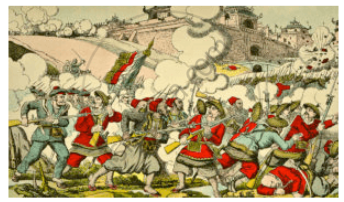
In the Middle Ages, Europeans set out to colonize Asian countries. They justified this with the famed ‘white man’s burden’ theory. It claimed that Europeans were the most civilized and hence had a ‘duty’ to civilize the rest of the world.
However, in reality, Europeans desired a location from which they could buy cheap raw materials as well as a market in which to sell their products. This system was highly exploitative, resulting in the split between 'developed' and ‘underdeveloped’ countries.
Vietnam as a Colony
The French created a colony in Vietnam from 1858 until 1880, just as the British did in India in 1757. After the Franco-Chinese War, the French took control of Tonkin and Annam. Following that, they created a solid grip over the country, causing unhappiness among the population and contributing to the emergence of nationalism.
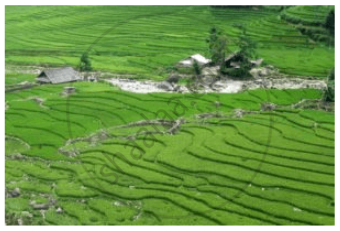
At first, the French aimed to promote agriculture. They made various canal networks and recovered swampy land for farming. Rice farming expanded from 274,000 hectares to 2.2 million hectares in 1930. By 1931, Vietnam was the world's third-largest producer of rice. Two-thirds of it was exported, with the French reaping all of the earnings.
Even infrastructure was constructed to assist with mass production in Vietnam. Railway networks were built to facilitate the transportation of goods and people. Railways connected the north and south of Vietnam to Yunnan in China and Siam (Thailand). Vietnamese people toiled as bonded labour to construct these infrastructures. They faced widespread human rights abuses and were exploited for profit.
