Advertisements
Advertisements
प्रश्न
Except endocrine function, what are the other functions of placenta.
Advertisements
उत्तर
Placenta facilitates the supply of oxygen and nutrients to the embryo. It also removes CO2 and excretory wastes produced by embryo.
APPEARS IN
संबंधित प्रश्न
When and where do chorionic villi appear in humans?
State the Function of Chorionic Villi
Medically it is advised to all young mothers that breast-feeding is the best for their newborn babies. Do you agree? Give reasons in support of your answer.
Mention any two functions of the human placenta.
Gonads develop from embryonic ______.
Which of the following hormones is not a secretory product of human placenta?
In the development of the human body, the ectoderm is responsible for the formation of ______.
Relaxin is the hormone secreted by the placenta.
Mark the odd one.
To answer the question, study the graphs below for Subjects 1 and 2 showing different levels of certain hormones.
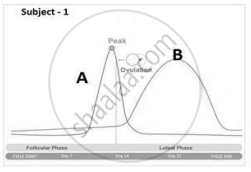
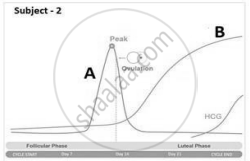
Subject 2 has a higher level of hormone B, which is ______
Read the following and answer from given below:
Cleavage is the series of rapid mitotic divisions in the zygote and forms blastula. The 2, 4, 8, 16 daughter cells are called blastomeres. An embryo with 64 blastomeres is known as a blastocyst and has a blastocoel cavity. Blastocyst gets implanted in the uterine wall and leads to pregnancy.
At which stage of embryonic development does trophectoderm develop?
Several hormones like HCG, HPL estrogen, and progesterone are produced by ______.
Extra-embryonic membranes provide:
Explain the formation of placenta after the implantation in a human female.
The diagram given below shows the early embryonic stages of fish, reptiles, birds and humans. Though adult reptiles, birds and mammals breathe air, their embryos possess gills. How does this fact support evolution?

Through which structure is the placenta connected to the embryo, containing blood vessels for substance transport?
Which germ layer gives rise to the heart, blood vessels, muscles, and bones?
At what point during pregnancy is the embryo officially referred to as a fetus?
What is the name of the process by which the blastocyst becomes embedded in the endometrium?
