Advertisements
Advertisements
प्रश्न
Distinguish between Natality and Mortality.
Advertisements
उत्तर
| Natality | Mortality |
| Natality is defined as the number of birth of organisms in a population of a specific area with the passage of time. | Mortality is defined as the number of deaths of organisms in a population of a specific area with the passage of time. |
| Natality is an inherent ability of a population to increase | Mortality decreases population size. |
APPEARS IN
संबंधित प्रश्न
Construct an age pyramid which reflects an expanding growth status of human population.
In sex ratio, Tamil Nadu ranks
Which district has the lowest child sex ratio?
Which Union Territory has the highest sex ratio?
In human development index, TN is ranked
State any two districts with favourable sex ratio. Indicate the ratios.
The number of individuals of the same species that have come into the habitat from elsewhere during the time period under consideration is known as ______.
On which of the following factors does the population growth of a country depends upon?
Which phase of the Logistic growth curve shows that the population density has reached the canying capacity in a habitat with limited resources?
Population density at time 't+ l' can be correctly represented as ______.
Which of the following attributes links ecology to population dynamics, genetics, and evolution?
The number of individuals present per unit space in a given time is known as ______.
The birth rate of a population is also known as______.
In a population, natality is used to represent ____________.
Which of the following situations contributes to increase in density of population?
What will be the net increase in the population if the average natality was 250, average morta1ity 240, immigration 20 and emigration 30?
Identify the type of population depicted in the given pyramid.

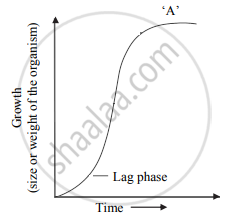
Identify ‘A’ in the given graph of population growth:
What are the decisive factors for population density?
Match the following:
| Column A | Column B | ||
| (i) | Organism | (a) | Large unit with specific climatic zone |
| (ii) | Population | (b) | Different species in particular area |
| (iii) | Community | (c) | Same species in a geographical area |
| (iv) | Biome | (d) | Basic unit of ecological hierarchy |
According to population ecology principles, at which level does natural selection operate?
Using the formula \[
D = \frac{N}{S}
\], if a forest region contains 500 trees and has an area of 50 square kilometers, what is the population density?
What is the relationship between absolute natality and realised natality?
In a laboratory container with 40 fruit flies, if 4 die within a week, what is the mortality rate?
How does mortality affect population size?
