Advertisements
Advertisements
प्रश्न
Distinguish between.
Man made material and natural material.
Advertisements
उत्तर
| S. No. | Natural materials | Man-made materials |
| 1. | Natural materials are those materials, which occur in nature on their own. | Man-made materials are a type of material that doesn't occur naturally and is made by humans. |
| 2. | They are both renewable and non-renewable in nature. | They are non-renewable in nature. |
| 3. | They help in the economic development of people. | They help in economic as well as social development. |
| 4. | They are eco-friendly. | They are not environmentally friendly. |
| 5. | They are not manufactured in factories. | They are manufactured in factories. |
| 6. | Examples: wood, rock, minerals, water, soil, etc. | Examples: glass, plastic, artificial thread, thermocol, etc. |
संबंधित प्रश्न
Explain why plastic containers are favoured for storing food.
Explain the difference between thermoplastic and thermosetting plastics.
Who is my partner?
| 'A' column | 'B' column |
| a. Lead glass | i. Plates |
| b. Bakelite | ii. Mattresses |
| c. Thermocol | iii. Electric bulb |
| d. Optic glass | iv. Electric switch |
| e. Polypropylene | v. Lens |
How the plastic is produced?
Can you replace the following packaging material with those which can be recycled or reused.
Dry eatables in polythene.
Why should we be careful in using plastic bags to store cooked food items?
True or False
Refuse (avoid) is the best way to manage plastic.
Look at the following picture and explain what is happening.
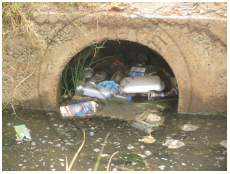
Read the following information and convert them into a graph to compare the countries and the amount of plastic they use.
China contributes the highest share - that is around 28%, of the total plastic used globally. Indonesia uses 10%, both the Philippines and Vietnam use 6% each; Thailand uses 3.2%, Egypt 3%, Nigeria 2.7% and South Africa 2%.
Most one-time-use plates are made from ______.
