Advertisements
Advertisements
प्रश्न
Distinguish between fixed and circulatory capital.
Advertisements
उत्तर
| Fixed capital | Circulatory capital |
| Fixed capital refers to those capital goods which can be used again and again in production. | In it, all those things are included which are used in production only once. |
| Example: machinery, factory building | Example: Cotton and fuel |
APPEARS IN
संबंधित प्रश्न
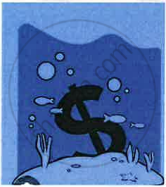
Identify what type of capital is it?
Is a multiple use power generating machine owned by a factory, sunk capital or floating capital? Give two arguments to support of your answer.
Observe the relationship of the first pair of words and complete the second pair.
Office furniture; Fixed capital
Power of running the plant ______
______ capital is used once in production whereas ______ capital can be used for long time.
Which of the following types of capital can be used only for a specific purpose?
Explain in brief the term sunk capital.
Define real capital.
Give two examples of real capital.
Classify the following into fixed capital and working capital. Give reasons:
Iron ore in steel plant.
Out of the following capital used in the cotton textile industry classify the following as fixed or circulating capital.
- Cotton yarns
- Dyes
- Power
- Weaving machines
