Advertisements
Advertisements
प्रश्न
Discuss the Salt March to make clear why it was an effective symbol of resistance against colonialism.
Advertisements
उत्तर
On 31 January, 1930, Gandhi sent a letter to then Viceroy Irwin, containing his 11 essential demands. Some of these were general interests, while others were specific demands from various strata, ranging from industrialists to peasants. The idea was to broaden the demands so that people from all walks of life in India could identify with them and join forces in a single effort. The most unusual demand was to repeal the salt tax. Salt was consumed by both the rich and the poor, and it was an essential part of food.
According to Gandhi, taxation on salt and the government’s monopoly on its manufacturing exposed the most repressive aspect of British rule. The successful Salt March showed Gandhi’s satyagraha approach to the British colonial authorities. The Salt March was, without a doubt, the most powerful symbol of colonial resistance.
APPEARS IN
संबंधित प्रश्न
How did ‘Salt March’ become an effective tool of resistance against colonialism? Explain
Describe the main features of the 'Salt March'.
What is meant by the idea of satyagraha?
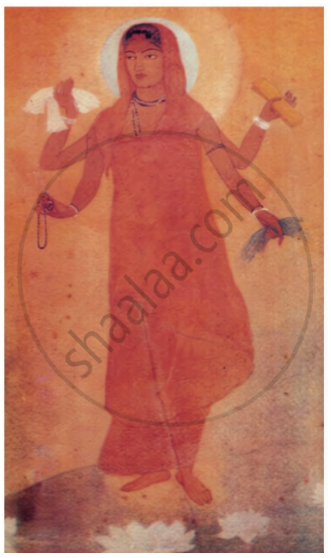
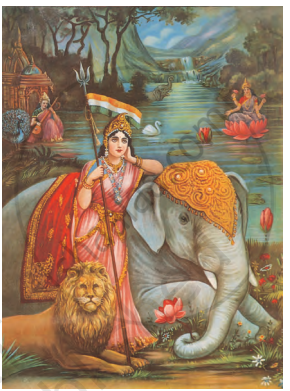
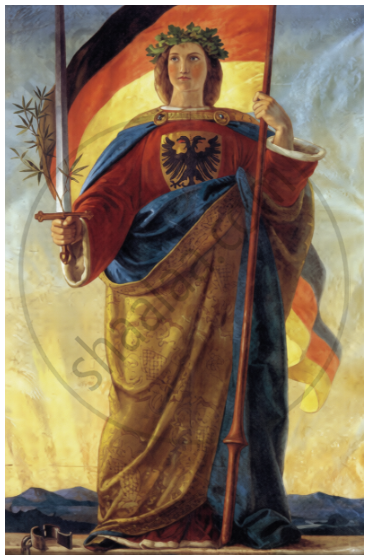
Compare the images of Bharat Mata with the image of Germania.
What is meant by Satyagraha?
Read the given case and answer the questions that follow:
|
Mahatma Gandhi's thoughts on Satyagraha 'It is said of "passive resistance" that it is the weapon of the weak, but the power which is the subject of this article can be used only by the strong. This power is not passive resistance; indeed it calls for intense activity. The movement in South Africa was not passive but active...' 'Satyagrah is not a physical force. A satyagrah does not inflict pain on the adversary, he does not seek his destruction... In the use of satyagraha, there is no ill-will whatever.' 'Satyagraha is pure soul-force. 'Truth is the very substance of the soul. That's why this force is called satyagraha. The soul is informed with knowledge. In it burns the flame of love ... Non-violence is the supreme dharma.' 'It is certain that India cannot rival Britain or Europe in force of arms. The British worship the war-god and they can all become, bearers of arms. The hundreds of millions in India can never carry arms. They have made the religion of non-violence their own ... ' |
- What type of movement Gandhiji organised in South Africa?
- Why is satyagraha considered as pure soul-force?
- How has Gandhiji described passive resistance?
