Advertisements
Advertisements
प्रश्न
With the coming of Gandhiji the National Movement started witnessing major and minor eventful happenings that made history. On the basis of this statement, describe about Champaran Satyagrahas in brief.
Advertisements
उत्तर
Champaran (Bihar) Satyagrahas was organised by Mahatma Gandhi. Mahatma Gandhi fought for the rights of indigo cultivators, who were subjected to illegal collection by British planters. The uprising later led to setting up a Commission which finally ruled in favour of the planters. This was one of the early successes of Mahatma Gandhi’s non-violent campaign.
संबंधित प्रश्न
What was the Khilafat Movement
With reference to the picture given below, answer the following questions:

- Identify the Memorial built for those who were killed in this incident.
- Where did this incident take place?
- Name the movement launched by Gandhi in 1920 as a consequence.
When and where was Gandhiji born? What was his full name?
What was the code of conduct set by Gandhiji for the inmates of the Ashram?
Why did Gandhiji put emphasis on manual labour and Charkha?
Mention one item each of the positive and negative programme of the Non-Cooperation Movement.
Gandhiji introduced new ideas in politics and adopted new methods to give a new direction of The political movement. In this context, discuss Gandhiji doctrine of Satyagraha.
Explain briefly the tragedy at the Jallianwala Bagh.
Why was the Non-Cooperation Movement withdrawn? How did this decision lead to the formation of the Swaraj Party?
Answer the following:
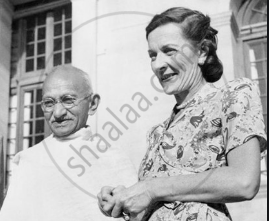
(i) Identify the male personality in the given picture.
(ii) Mention four ideological tenets of this Indian leader.