Advertisements
Advertisements
प्रश्न
Construct an age pyramid which reflects an expanding growth status of human population.
Advertisements
उत्तर

Growing population:
The population having larger number of individuals of the pre -reproductive age groups shows a very rapid growth rate. Thus is known as growing population.
Young individual in the age group (0-14 years) are included in pre-reproductive group, individuals in age group (15-59) are included in reproductive group and individuals in age group (60 yrs and above) are included in post reproductive group.
APPEARS IN
संबंधित प्रश्न
Define the term natality.
Which district has the lowest child sex ratio?
State any two districts with favourable sex ratio. Indicate the ratios.
The number of individuals of the same species that have come into the habitat from elsewhere during the time period under consideration is known as ______.
Identify the type of growth in the given figure of age pyramid.

Age pyramid
Complete the given analogy.
Mortality: No. of deaths in a population during a given period:: Emigration: ____________.
On which of the following factors does the population growth of a country depends upon?
Population density at time 't+ l' can be correctly represented as ______.
The type of population represented in the given age pyramid is ______.

What will be the net increase in the population if the average natality was 250, average morta1ity 240, immigration 20 and emigration 30?
The type of natality that is relative to a specific criterion such as age is ______.
Match the following Column I with Column II.
| Column I | Column II |
| A. Population | (i) Part of the earth has all ecosystems. |
| B. Community | (ii) Assemblage of all individuals belonging to different species of an area. |
| C. Ecosystem |
(iii) Group of similar individuals of the same species, found in an area. |
| D. Ecosphere | (iv) Interaction between living organisms and their physical environment. |
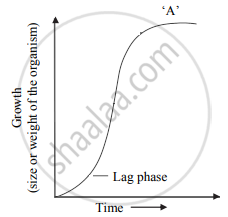
Identify ‘A’ in the given graph of population growth:
Explain the term Emigration.
According to population ecology principles, at which level does natural selection operate?
If a pond with an average population of 20 lotus plants experiences 8 new plants through reproduction in one year, what is the natality rate?
Which type of natality represents the number of births under ideal conditions with no competition and abundant resources?
What is the relationship between absolute natality and realised natality?
In a laboratory container with 40 fruit flies, if 4 die within a week, what is the mortality rate?
How does mortality affect population size?
