Advertisements
Advertisements
प्रश्न
Conduction of heat takes place through a ______ substance.
विकल्प
Radiation
White
Conduction
Blue
Convection
Bad conductor
Good conductor
Black
Reflection
Advertisements
उत्तर
Conduction of heat takes place through a good conductor substance.
Explanation:
This process occurs when heat moves from a higher temperature area to a lower temperature area, and is most effective in solids. Heat transfer in solids occurs due to direct contact between molecules or molecules.
संबंधित प्रश्न
No medium is required for transfer of heat by the process of ______.
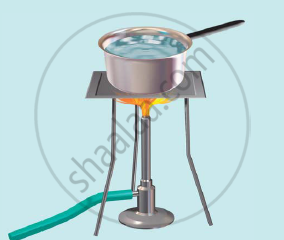
Look at Figure. Mark where the heat is being transferred by conduction, by convection and by radiation.
A wooden spoon is dipped in a cup of ice cream. Its other end ______.
Fill in the blank
A hot metallic piece is placed in tap water contained in a bucket. Heat will flow from _______ to _________
Fill in the blank
Heat transfer in solids is by ______
Fill in the blank
Heat transfer in liquids and gases is by ________.
Give one example of heat transfer by radiation.
What are the modes of heat transfer?
Why is the outer coat of the penguins of Antarctica black?
Why are heaters fitted near the floor and air conditioners near the ceiling of a room?
