Advertisements
Advertisements
प्रश्न
Collect information about temples in Tamil Nadu with the influence of Vijayanagara style
Advertisements
उत्तर
Temple architecture received a new impetus and reached to new heights under the patronage of the Vijayanagar rulers. About the architecture of the period. Prof. S.K. Saraswati has observed, “The most frequent design is one in which the shaft becomes either a central core or background for a group of statuary, of substantial proportion and carved practically on the ground. Important features of Vijayanagar style of temple and architecture were: monolithic pillars, ornate brackets, decoration on exterior side of the walls etc.
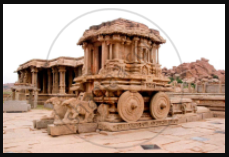
A large number of temples were built during this period. Krishnadevaraya built a temple dedicated to Lord Krishna. He renovated several temples. The most important was the temple of Hazara Rama. The royal family worshipped there. Its most interesting features were the four finely polished black stone pillars which support the ‘Mandapa’.
They have beautiful sculptures carved on them. The deities on the pillars represent Vishnu, Lakshminarayana, Krishna, Brahma and others. Scenes from the lipics are depicted on the outer walls of the shrine.
A number of temples were built during the medieval period in the South cities of Vellore, Kumbhakonam, Kalahsti. Srirangam, Conjeevam and Virinchipuram were dotted with magnificent temples.
The temples of Vithala and Pattabhirama also deserve mention. The most important features of the temple of Vithala are the ‘Mahamandappa’ and the ‘garbhagriha’. The Mahamandappa has 56 pillars. The ceilings above these pillars are highly ornamented. Likewise ‘garbhagriha’ is highly ornate:
A ‘rath’ in stone with finely carved wheels adds beauty to Vitthalaswami temple.
‘Gopurams’ – the entrances to the courts of the temples are a unique feature of the south Indian temples, particularly built during the medieval period. These colossal gateways which lend glamour and prestige to the temples were covered by lofty pyramidal tower rising up in storeys and ultimately crowned by a lofty vault. The ‘gopuram’ in the temple of Ekambaranath having ten storeys rising to the height of 188 feet is the most remarkable one.
APPEARS IN
संबंधित प्रश्न
Which was the most common animal depicted on the pillars of Vijayanagara style?
Kingship of Vijayanagar administration was hereditary, based on the principle of primo geniture -
Assertion (A): The Vijayanagar army was considered one of the feared armies in India.
Reason (R):- Vijayanagar armies used both firearm and cavalry.
Find out the wrong pair
In Vijayanagar administration, each province was administrated by a governor called ______.
Krishnadeva Raya wrote ______ an epic in Telugu.
Name the cottage scale industries of the Vijayanagar kingdom.
Describe the contribution of Vijayanagar rulers to Architecture.
A Persian emissary who visited the court of Krishna Devaraya was ______.
Who were the important scholars in Vijayanagar Empire?
