Advertisements
Advertisements
प्रश्न
Classify the chromosomes on the basis of position of centromere.
Advertisements
उत्तर
Types of Chromosomes :
According to the position of the centromere, chromosomes are classified into following types
Metacentric : If the centromere is situated in the middle of the chromosomes it is called metacentric chromosomes.
Sub-metacentric : If the centromere is situated some distance away from the middle it is called submentacentric chromosomes.
Acrocentric : If the centromere is situated near the end of the chromosomes it is called acrocentric chromosome
Telocentric : If the centromere is situated at the tip of the chromosome it is called telocentric chromosome.

APPEARS IN
संबंधित प्रश्न
Distinguish between X andY chromosomes. (Mention any 'two' points.)
Describe the structure of chromosomes with a suitable diagram.
The A and B genes are 10 cm apart on a chromosome. If an AB/ab heterozygote is test crossed to ab/ab, how many of each progeny class would you expect out of 100 total progeny?
Identify the scientists who proposed chromosomal theory of inheritance.
During cell division, spindle fibres get attached to the disc shaped structures present on the centromere are known as ______.
Extranuclear inheritance occurs in ______.
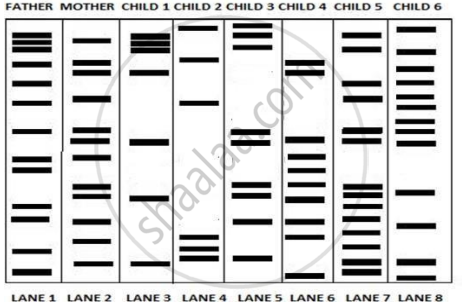
There was a mix-up at the hospital after a fire accident in the nursery division. Which of these children belong to the parents?
During mitosis, chromosomes distribution to the daughter cell is ______.
Despite differing in size and morphology, what equal contribution do male and female gametes make to offspring according to the Chromosomal Theory?
How many scientists independently rediscovered Mendel's laws of inheritance in the year 1900?
