Advertisements
Advertisements
प्रश्न
A shopkeeper buys 80 articles for Rs 2,400 and sells them for a profit of 16%. Find the selling price of one article.
Advertisements
उत्तर
It is given that the shopkeeper buys 80 articles for Rs 2,400
Cost of one article = Rs `2400/80` = Rs 30
Profit percent = 16
Profit percent = `"Profit"/"C.P" xx 100`
16 = `"Profit"/"Rs 30" xx 100`
Profit = Rs `(16 xx 30)/10` = Rs . 4.80
Selling price of one article = C.P. + Profit = Rs (30 + 4.80) = Rs 34.80
संबंधित प्रश्न
By selling a pair of earings at a discount of 25% on the marked price, a jeweller makes a profit of 16%. If the profit is Rs 48, what is the cost price? What is the marked price and the price at which the pair was eventually bought?
Shikha purchased a car with a marked price of RS 210000 at a discount of 5%. If VAT is charged at the rate of 10%, find the amount Shikha had paid for purchasing the car.
The cost price and selling price are given in the following table. Find out whether there was a profit or a loss and how much it was.
| Cost Price (in Rs.) |
Selling Price (in Rs) |
Profit or Loss | How much? |
| 4500 | 5000 |
Kusumtai bought 80 cookers at Rs 700 each. Transport cost her Rs 1280. If she wants a profit of Rs 18000, what should be the selling price per cooker?
Find the unknowns x, y and z.
| Name of the item | Marked Price | Selling Price | Discount |
| Book | ₹ 225 | x | 8% |
A branded Air-Conditioner (AC) has a marked price of ₹ 38000. There is a condition given for the customer.
Discount of 8% on the marked price but no free gifts. 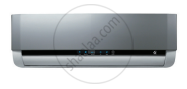
The single discount in % which is equivalent to two successive discounts of 20% and 25% is
The women of Meenkar Bank also want to start a factory to dry fish. The Panchayat has given them some land for that. Over the years they have saved Rs 74,000. They find out how much they will need for the factory.
Fazila writes the things they need to buy to begin. See the table for the cost of each item and the number of items they want to buy. Find the total cost.
| Item | Price of each | Number of items | Cost |
| Borewell for freshwater | Rs 3000 | 1 | |
| Bamboo rack for fish drying | Rs 2000 | 20 | |
| Cement tank | Rs 1000 | 4 | |
| Tray and knife | Rs 300 | 20 | |
| Bucket | Rs 75 | 20 |
Total cost to set up the factory = ______
When fresh fish is dried it becomes `1/3` its weight.
In one month they plan to dry 6000 kg of fresh fish.
How much-dried fish will they get in a month?
The loss per cent on selling 140 geometry boxes at the loss of S.P. of 10 geometry boxes is equal to ______.
Aahuti purchased a house for ₹ 50,59,700 and spent ₹ 40300 on its repairs. To make a profit of 5%, she should sell the house for ₹ ______.
