Advertisements
Advertisements
प्रश्न
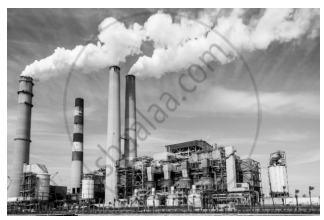
A city is considering building a waste incineration plant (as shown in above image) to manage its growing waste problem. However, some residents are concerned about the environmental and health impacts of burning waste.
- Explain how incineration works as a waste management technique.
- Describe any two potential benefits of incineration plant.
- Discuss any two environmental and health concerns associated with waste incineration.
विस्तार में उत्तर
Advertisements
उत्तर
- Incineration is the controlled burning of municipal, industrial or biomedical wastes at high temperatures inside a closed chamber (an incinerator). The heat oxidizes organic material, turning most of the waste into gases and a small solid residue (ash). Modern plants usually recover the heat to make steam and electricity and treat the flue gases and particulates before release.
-
- Large volume reduction and reduced landfilling: Incineration greatly reduces the bulk and mass of solid waste compared with open dumping or landfilling, so it lowers land requirements and the long‑term liabilities of landfills.
- Energy/resource recovery and recycling of residues: Heat from combustion can be captured to produce steam and electricity (waste‑to‑energy), and non‑combustible residues such as metals and glass can be recovered and recycled from the ash.
- Two environmental and health concerns:
- Air emissions and health risks: Incineration can emit pollutants (particulate matter, acid gases, heavy metals such as mercury and lead, and persistent organic pollutants like dioxins and furans). These pollutants can cause respiratory and other health problems and some (e.g., dioxins, mercury) bioaccumulate and carry long‑term cancer and developmental risks.
- Hazardous ash and disposal problems: Combustion produces fly ash and bottom ash; fly ash can concentrate toxic substances and must be handled as hazardous waste. Improper disposal or leaching from ash can contaminate soil and groundwater and lead to biomagnification in food chains.
shaalaa.com
क्या इस प्रश्न या उत्तर में कोई त्रुटि है?
2024-2025 (March) Official Board
