Advertisements
Advertisements
प्रश्न
_____ gas is transported to all parts of the body.
Advertisements
उत्तर
Oxygen gas is transported to all parts of the body.
संबंधित प्रश्न
State the functions of blood in our body.
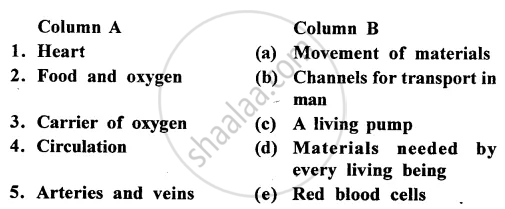
Match the statements in Column A with those in Column B:
Give reason for the following:
The blood groups of both the donor and recipient must be known before transfusing blood.
What is haemoglobin? State the consequences of deficiency of haemoglobin in our bodies.
What is meant by the term 'double circulation' of blood in mammals? What is diastole?
Describe, in brief, the circulatory system in human beings.
Match the following.
| Group A | Group B |
| (1) Lungs | (a) Circulation |
| (2) Stomach | (b) Respiration |
| (3) Heart | (c) Co-ordination |
| (4) Brain | (d) Digestion |
Describe how the exchange of oxygen and carbon dioxide gases takes place in the lungs.
Why do we call saliva a digestive juice?
From the following identify the normal haemoglobin count in adult male.
