Topics
Number Systems and Binary Arithmetic
Program Analysis
Introduction to C+ +
- Introduction to C++
- Character Sets
- Standard I/O Strems in C++
- Type Modifiers
- C++ Data Types
- Variables in C++
- Constants
- Compiler Tokens
- Operators in C++
- Comments in C++
- Scope and Visibility
- Control Statements
- Functions in C++
- Default Arguments
- Techniques used to pass Variables into C++ Functions
- Function Overloading
- Inline Functions
- Recursion
- Pointers in C++
- Arrays in Data Structure
- References
- Type Conversion in Expressions
Visual Basic
Introduction to Networking and Internet
- Introduction to Networking Technology
- Networking Terms and Concepts
- Concept of Computer Network
- Network Security
- Network Applications
Programming Techniques
Before programming user has to decide the method in which program is to be developed There are two basic techniques
1) Structured programming
2) Modular programming
1) Structured Programming
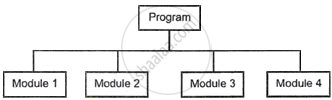
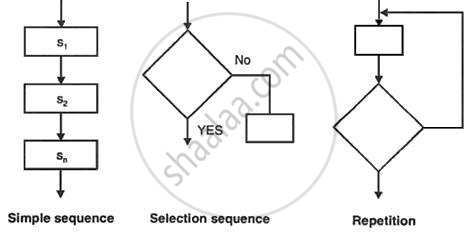
The program is developed in a hierarchy of modules, where module refers to a subprogram in the main program. It is a top-to-bottom approach. In this technique three basic structures are normally adopted, such as
1) A simple sequence
2) A selection by decision
3) A repetition
2) Modular Programming
A main module is prepared just by writing instructions of control. Submodules are prepared by writing required programs in the main program. Each subprogram may be called a "Functions" or "Procedures." Modular programming reduces rewriting the subprograms Modular programming allows complex problems to be divided into simple parts. All these parts (modules) are controlled by a single program. Each module may be called as a subroutine.