Advertisements
Chapters
1.02: Early Vedic Civilization
1.03: The Later Vedic Age
1.04: India in the 6th Century BC: Rise of Jainism and Buddhism
1.05: The Mauryan Empire
1.06: The Sangam Age: Kingdoms and The Social and Economic Conditions
1.07: The Age of the Guptas
1.08: South India and the Cholas
1.09: The Delhi Sultanate
1.1: The Mughal Empire
▶ 1.11: The Composite Culture: Bhakti Movement, Sufism and Influence of Christianity on Indian Society
1.12: The Renaissance
1.13: The Reformation
1.14: Industrial Revolution and Capitalism and Socialism
2.1: Our Constitution and Its Preamble
2.2: Fundamental Rights, Fundamental Duties and Directive Principles of State Policy
2.3: Elections and the Election Commission
2.4: Local Self-Government: Rural Local Institutions
2.5: Local Self-Government: Urban Local Institutions
![Goyal Brothers Prakashan solutions for हिस्टरी अँड सिविक्स [इंग्रजी] इयत्ता ९ आयसीएसई chapter 1.11 - The Composite Culture: Bhakti Movement, Sufism and Influence of Christianity on Indian Society - Shaalaa.com](/images/history-and-civics-english-class-9-icse_6:d32696c6374e4cccbf4514b4668532d6.JPG "Goyal Brothers Prakashan solutions for हिस्टरी अँड सिविक्स [इंग्रजी] इयत्ता ९ आयसीएसई chapter 1.11 - The Composite Culture: Bhakti Movement, Sufism and Influence of Christianity on Indian Society")
Advertisements
Solutions for Chapter 1.11: The Composite Culture: Bhakti Movement, Sufism and Influence of Christianity on Indian Society
Below listed, you can find solutions for Chapter 1.11 of CISCE Goyal Brothers Prakashan for हिस्टरी अँड सिविक्स [इंग्रजी] इयत्ता ९ आयसीएसई.
Goyal Brothers Prakashan solutions for हिस्टरी अँड सिविक्स [इंग्रजी] इयत्ता ९ आयसीएसई 1.11 The Composite Culture: Bhakti Movement, Sufism and Influence of Christianity on Indian Society Exercises
What is meant by Composite Culture?
Name any two factors responsible for the emergence of Composite Culture in India.
Mention any one impact of the emergence of Composite Culture in India.
Name any two sources to reconstruct religious thoughts and ideas leading to the growth of Composite Culture.
What is Bijak?
Name any two Sikh Gurus whose sermons and hymns are included in the Adi Granth.
Name any two saints other than the Sikh Gurus whose devotional hymns are included in the Adi Granth.
Who among the Sikh Gurus announced the end of personal Guruship and named Guru Granth Sahib as the Guru of the Sikhs?
Who founded the Chisti Order (Silsila)?
Name the two stages in the Spiritual Path leading one to the Union with God?
Who sought the Raja’s permission to build a fort at Kochi?
Mention any one historic merit of the St. Francis Assisi Church at Kochi.
Mention the two main features (principles) of the Bhakti Cult.
Mention the contribution made by Sant Dhyaneshwar to Marathi literature.
Mention the two main teachings of Kabir.
Mention the two important teachings of Guru Nanak
Who was Mirabai? What was her message to the people?
Name the two famous Sufi Saints of India.
Mention the two main principles of Sufism.
When and by whom was Christianity believed to have been introduced in India?
Who was St. Francis Xavier?
Which two principles did St. Francis Xavier include among the human values?
Goyal Brothers Prakashan solutions for हिस्टरी अँड सिविक्स [इंग्रजी] इयत्ता ९ आयसीएसई 1.11 The Composite Culture: Bhakti Movement, Sufism and Influence of Christianity on Indian Society Structured Questions
Explain the sources of reconstructing religion thoughts and ideas leading to the growth of Composite Culture with reference to:
Bijak’s contents
Explain the sources of reconstructing religion thoughts and ideas leading to the growth of Composite Culture with reference to:
Guru Granth Sahib and Guru Nanak Dev’s teachings
Explain the importance of the following:
Ajmer Sharief Dargah
Explain the importance of the following:
Historic merit of the St. Francis Assisi Church, Kochi.
Explain the significance (impact) of the Bhakti movement under the following head:
Ensuring Harmony between Hindus and Muslims.
Explain the significance (impact) of the Bhakti movement under the following head:
Preaching the fundamental Equality of all human beings.
Explain the significance (impact) of the Bhakti movement under the following head:
Promoting regional languages and Devotional Literature
Explain the rise and significance of the Sufi Movement with reference to:
Nizam-ud-Din Auliya’s main beliefs
Explain the rise and significance of the Sufi Movement with reference to:
Impact of Sufism on Indian Society
Describe Francis Xavier’s missionary activities in India under the following headline:
His preachings among the pearl-fishers along the East Coast of Southern India.
Describe Francis Xavier’s missionary activities in India under the following headline:
His love for children of born parents not legally married.
No survey of the Bhakti movement can omit the names of great woman figure who left the impression of their preaching upon future generations. In this context, explain briefly the preaching.
Lallesvari.
No survey of the Bhakti movement can omit the names of great woman figure who left the impression of their preaching upon future generations. In this context, explain briefly the preaching.
Mirabai
Name the book, where Kabir’s teachings are recorded.
Mention two important aspects of the teachings of Chaitanya Mahaprabhu.
Who was Lallesvari? What are her teachings?
Explain the characteristics of Muslim architecture under these head:
Mosques and Tombs.
Goyal Brothers Prakashan solutions for हिस्टरी अँड सिविक्स [इंग्रजी] इयत्ता ९ आयसीएसई 1.11 The Composite Culture: Bhakti Movement, Sufism and Influence of Christianity on Indian Society Additional Questions Short Answer Questions
What is meant by the term composite culture?
Mention the two phases of the growth of Indo-Islamic culture.
Mention any two factors which promoted composite culture during the Mughal Age.
Name the first work on Indian music compiled by an Islamic scholar.
Name the two Indian motifs used in Islamic architecture in India.
Name a temple built on the arch and dome principle of Islamic architecture.
Mention any two features of Mughal Architecture.
Name any two poets who wrote in Urdu.
What is meant by Sufism? Name two Sufi saints.
Mention any two doctrines of Sufism.
What is known as Chishti Silsila?
Mention any two doctrines of Bhakti cult.
Who was Kabir? Mention any two of his teachings?
Mention any three teachings of Guru Nanak.
Who was St. Francis Xavier? What did he do to spread Christianity among Indians?
Mention any two steps taken by the Christian missionaries to spread the belief of Christianity through language and literature.
Goyal Brothers Prakashan solutions for हिस्टरी अँड सिविक्स [इंग्रजी] इयत्ता ९ आयसीएसई 1.11 The Composite Culture: Bhakti Movement, Sufism and Influence of Christianity on Indian Society Additional Questions Structured Questions
Explain briefly the Indo-Islamic culture. How can you say that it was a composite culture?
What were the factors that led to the emergence of composite culture during the Mughal Age?
What were the salient features of Indo-Islamic architecture?
With reference to the composite culture, state briefly the impact of this culture on the following:
Literature
With reference to the composite culture, state briefly the impact of this culture on the following:
Architecture
With reference to the composite culture, state briefly the impact of this culture on the following:
Paintings
Sufism was a liberal reform movement within Islam With reference to Sufism write short notes on the following:
Devotion to God
Sufism was a liberal reform movement within Islam. With reference to Sufism, write short note on the following:
Caste distinctions
Sufism was a liberal reform movement within Islam With reference to Sufism write short notes on the following:
Unity of all religions
Summarise the impact of Bhakti movement with regard to:
Equality of all human beings
Summarise the impact of Bhakti movement with regard to:
Fostering unity and harmony between different communities.
Summarise the impact of Bhakti movement with regard to:
Promoting regional languages and devotional literature.
With reference to the influence of Christianity during the Mughal period, answer the following question:
Explain the role played by St. Francis Xavier and Robert de Nobili in spreading Christianity in India.
With reference to the influence of Christianity during the Mughal period, answer the following question:
Explain the role of Christian missionaries in promoting language, literature, and art in India.
With reference to the given pictures, answer the following:
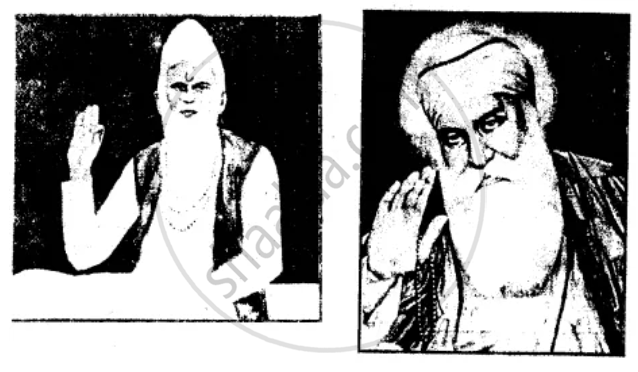
Name the Bhakti Saints given in the pictures. Where were they born?
With reference to the given pictures, answer the following:
Mention any two teachings of each of these two saints.
With reference to the given pictures, answer the following:
How did the Sufi and the Bhakti movements foster the growth of Indo-Islamic culture?
Solutions for 1.11: The Composite Culture: Bhakti Movement, Sufism and Influence of Christianity on Indian Society
Goyal Brothers Prakashan solutions for हिस्टरी अँड सिविक्स [इंग्रजी] इयत्ता ९ आयसीएसई chapter 1.11 - The Composite Culture: Bhakti Movement, Sufism and Influence of Christianity on Indian Society
Shaalaa.com has the CISCE Mathematics हिस्टरी अँड सिविक्स [इंग्रजी] इयत्ता ९ आयसीएसई CISCE solutions in a manner that help students grasp basic concepts better and faster. The detailed, step-by-step solutions will help you understand the concepts better and clarify any confusion. Goyal Brothers Prakashan solutions for Mathematics हिस्टरी अँड सिविक्स [इंग्रजी] इयत्ता ९ आयसीएसई CISCE 1.11 (The Composite Culture: Bhakti Movement, Sufism and Influence of Christianity on Indian Society) include all questions with answers and detailed explanations. This will clear students' doubts about questions and improve their application skills while preparing for board exams.
Further, we at Shaalaa.com provide such solutions so students can prepare for written exams. Goyal Brothers Prakashan textbook solutions can be a core help for self-study and provide excellent self-help guidance for students.
Concepts covered in हिस्टरी अँड सिविक्स [इंग्रजी] इयत्ता ९ आयसीएसई chapter 1.11 The Composite Culture: Bhakti Movement, Sufism and Influence of Christianity on Indian Society are Sources of the Cholas - Inscriptions, Sources of the Cholas - Brihadishwara Temple, The Cholas - Political History and Administration, Sources of the Delhi Sultanate - Inscriptions, Sources of the Delhi Sultanate - Qutab Minar, The Delhi Sultanate - Political History and Administration, The Mughal Empire Sources: Ain-i-akbari, Taj Mahal, Jama Masjid and Red Fort, The Mughal Empire - Political History and Administration, Composite Culture Sources: Bijak, Guru Granth Sahib, Ajmer Sharief, St. Francis Assisi Church (Kochi), Significance of Bhakti Movements and Sufism, Influence of Christianity, A Case Study of Akbar and His Times.
Using Goyal Brothers Prakashan हिस्टरी अँड सिविक्स [इंग्रजी] इयत्ता ९ आयसीएसई solutions The Composite Culture: Bhakti Movement, Sufism and Influence of Christianity on Indian Society exercise by students is an easy way to prepare for the exams, as they involve solutions arranged chapter-wise and also page-wise. The questions involved in Goyal Brothers Prakashan Solutions are essential questions that can be asked in the final exam. Maximum CISCE हिस्टरी अँड सिविक्स [इंग्रजी] इयत्ता ९ आयसीएसई students prefer Goyal Brothers Prakashan Textbook Solutions to score more in exams.
Get the free view of Chapter 1.11, The Composite Culture: Bhakti Movement, Sufism and Influence of Christianity on Indian Society हिस्टरी अँड सिविक्स [इंग्रजी] इयत्ता ९ आयसीएसई additional questions for Mathematics हिस्टरी अँड सिविक्स [इंग्रजी] इयत्ता ९ आयसीएसई CISCE, and you can use Shaalaa.com to keep it handy for your exam preparation.
