Advertisements
Advertisements
प्रश्न
Why is a normal eye not able to see clearly the objects placed closer than 25 cm?
Advertisements
उत्तर १
A normal eye is unable to clearly see objects placed closer than 25 cm because the ciliary muscles of the eyes are unable to contract beyond a certain limit.
उत्तर २
A normal eye can see clearly at a distance of no less than 25 cm. So, anything closer than 25 cm will be too close for a normal eye to see clearly.
संबंधित प्रश्न
The least distance of distinct vision for a young adult with normal vision is about ______.
The change in focal length of an eye lens is caused by the action of the ______.
Write the name.
The sensation on the retina persists for a while is
Write the name.
The persons which are unable to distinguish between different colours
Write an Explanation.
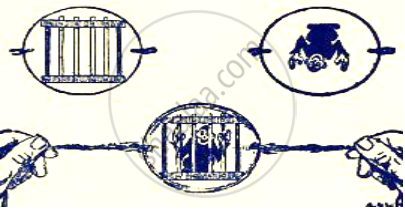
Persistence of vision
Identify and explain concepts given in this diagram.
The eyes of the nocturnal birds like owls are having a large cornea and a large pupil. How does it help them?
Near and far points of a young person normal eye respectively are:
The ability of the eye lens to adjust its focal length to form a sharp image of the object at varying distances on the retina is called:
A student sitting on the last bench can read the letters written on the blackboard but is not able to read/the letters written in his textbook. Which of the following statements is correct?
How are we able to see nearby and also the distant objects clearly?
A piece of red glass is heated till its glows in dark. The colour of flowing glass would be:-
In the blind spot of the human eye ______.
In simple microscope ______ lens is used.
Name the following:
Two types of adaptations.
Define the following term:
Adaptation
Differentiate between members of the following pair with reference to what is asked in the bracket.
Near and distant accomodation (shape of lens).
Differentiate between members of the following pair with reference to what is asked in the bracket.
Dark and light adaptation (pigments which will be regenerated).
The figures (A) and (B) given below are showing some kind of adjustment. Study the figures and answer the questions that follow.
| A | 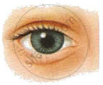 |
 |
B |
- Identify the kinds of adjustments done in the figures (A) and (B).
- Distinguish between the adjustments of figures (A) and (B) on the basis of:
- The size of pupil.
- The pigment which gets regenerated.
- Cells of the retina.
