Advertisements
Advertisements
प्रश्न
Which of the following do not exhibit Tyndall effect ?
Starch solution, Sugar solution, Ink, Salt solution, Copper sulphate solution, Ammonium chloride solution, Fog, Smoke, Car exhausts.
Advertisements
उत्तर
Sugar solution, salt solution, copper sulphate solution, and ammonium chloride solution do not show Tyndall effect because the particles in these solutions are too small to scatter light in different directions.
APPEARS IN
संबंधित प्रश्न
Intermolecular force of attraction is maximum in ............ less in .......... and the least in .............
Liquids have definite volume but do not have definite shape.
Define matter.
When a crystal of potassium permanganate is placed in a beaker, its purple colour spreads throughout the water. What does this observation tell us about the nature of potassium permanganate and water?
Name a liquid which can be classified as a pure substance and conducts electricity.
Name one element, one compound and one mixture.
Define a compound. Give two points of evidence to show that sodium chloride is a compound.
Name a metal which has a low melting point.
Classify the following into elements, compounds and mixtures :
arble, Air, Gold, Brass, Sand, Diamond, Graphite, Petroleum, Common salt, Sea-water, Chalk
Which of the following does not have a fixed melting point/boiling point ?
There are three substances X, Y and Z. The substance X does not have a fixed melting point or boiling point and it still shows the individual properties of its constituents. The substance Y is a pure substance which occurs in nature as such. The substance Y has a fixed melting point and boiling point but it cannot be broken down into simpler substances by any chemical means. The substance Z is also a pure substance whose properties are entirely different from those of its constituents. The substance Z can, however, be divided by electrolysis into two substances which belong to the same class of substances as Y.
- What type of substance could X be ? Name one substance like X.
- What type of substance could Y be ? Name one substance like Y.
- What type of substance could Z be ? Name one substance like Z.
- Which process involves absorption or release of an appreciable amount of energy : formation of substance X or formation of substance Z ?
- Name the three groups into which all the substances like Y are divided on the basis of their properties.
Fill in the following blank :
Milk is a .................... solution but vinegar is a .................... solution.
Which of the following will show Tyndall effect ? Why ?
- Salt solution
- Starch solution
- Milk
- Copper sulphate solution
Which technique can be used to detect and identify traces of poison present in the stomach wash of a person ?
Describe a method to separate a mixture of common salt and sand.
Describe a method to separate a mixture of camphor and sand.
Which among the following ______ will get attracted to by magnet?
Justify your answer.
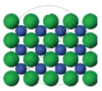
| Figure 1 | Figure 2 | Figure 3 |
 |
 |
 |
The arrangement of particles in three different phases of matter is shown above.
- Which state is represented by Fig. 1?
- In which state will the inter-particle attraction be maximum?
- Which one of them cannot be contained in an open vessel?
- Which one can take the shape of its container?
______ is a smallest particle.
The most reactive metal is ______.
