Advertisements
Advertisements
प्रश्न
Which of the following are compounds ?
- CO
- No
- NO
- Co
पर्याय
(i) and (ii)
(ii) and (iii)
(i) and (iii)
(i) and (iii)
(ii) and (iv)
Advertisements
उत्तर
(i) and (iii)
CO and NO are compounds. While CO is made up of carbon and oxygen, NO is made up of nitrogen and oxygen.
APPEARS IN
संबंधित प्रश्न
The inter-molecular force is maximum in
Name the terms for the change of a solid into liquid.
Out of solids, liquids and gases, which one has :
- maximum movement of particles ?
- maximum interparticle attractions ?
- minimum spaces between particles ?
Explain why, osmosis can be considered to be a special kind of diffusion. Classify the following into
(i) osmosis, and (ii) diffusion :
- swelling up of a raisin on keeping in water
- spreading of virus on sneezing
- earthworm dying on coming in contact with common salt
- shrinking of grapes kept in thick sugar syrup
- preserving of pickles in salt
- spreading of smell of cake being baked in the kitchen
- aquatic animals using oxygen dissolved in water during respiration
Name the property which enables metals to be drawn into wires.
What are the two types of pure substances? Give one example of each type.
You are given two liquids, one a solution and the other a compound. How will you distinguish the solution from the compound ?
The element which is not common between the compounds called baking soda and soda ash is
State whether the following statement is true or false :
Bread is an example of solid foam.
One of the following is a solid foam. This one is :
One of the following does not show Tyndall effect. This one is :
What is the difference between colloids and suspensions ?
How will you separate a mixture of iron filings, chalk powder and common salt ?
The material which is added to water during purification process at the water works so as to disinfect it is :
Tincture of iodine is a mixture of two materials X and Y. The material Y has a property that its solid form can be converted directly into vapours on heating by a process called Z.
- What could X be ?
- What could Y be ?
- Name the process Z.
- Which process would you use to recover both the components X and Y from tincture of iodine ?
- Which process can be used to recover only component Y from tincture of iodine ?
Asmita went to buy an earthen pot. There she saw many things kept for sale.
From what substance has the potter made all the things?
Justify your answer.
| Figure 1 | Figure 2 | Figure 3 |
 |
 |
 |
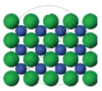
The arrangement of particles in three different phases of matter is shown above.
- Which state is represented by Fig. 1?
- In which state will the inter-particle attraction be maximum?
- Which one of them cannot be contained in an open vessel?
- Which one can take the shape of its container?
State whether true or false. If false, correct the statement.
Oil and water are immiscible with each other.
You want to wear your favourite shirt to a party, but the problem is that it is still wet after a wash. What steps would you take to dry it faster?
Complete the following table:
| S.No. | CELSIUS | KELVIN |
| 1. | 90°C | 363 K |
| 2. | ______ | 283 K |
| 3. | 63 °C | ______ |
| 4. | 250°C | ______ |
| 5. | ______ | 303 K |
