Advertisements
Advertisements
प्रश्न
The stick-together families are the happiest of all. Explain.
Advertisements
उत्तर १
Title: The stick – together families
Author: Edgar Albert Guest
Characters: Brothers and Sisters of joint families
Theme: There is nothing greater than a happy family.
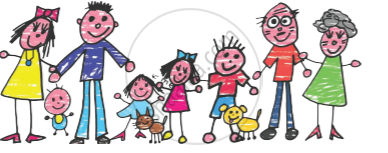
There is nothing quite as valuable as a happy family. The poet describes the happiness of the children in joint families. He calls the joint families the stick together families. The gladdest people in this world are the children from the joint family who circle near the fireside. At the end of each busy day, they have the finest meetings.
They share their fun together there. They are the people who win the joys of the earth. They are able to hear the sweetest music and find the finest happiness. All the old home roof shelters all the pleasures that life can give. It is the happiest place to live and there is the gladdest play – ground for the children The wandering brothers can come back to the joint family unto the fireside to enjoy the happiness.
“There is nothing greater than a joint family”.
उत्तर २
A joint family makes a happy home. The poet evaluates the happiness of the children in the stick – together families. The children from the joint families are the happiest in the world. They circle near the fireside and share their fun. They have the finest little gatherings after every busy day is done.
They win their joys of earth. They find the finest happiness by hearing the sweetest music. The old home shelters them with all charm that life can give. They have the gladdest play – ground. They also have the happiest living place. The wandering brothers can come back to enjoy the happiness of life.
“There is nothing greater than a joint family”.
APPEARS IN
संबंधित प्रश्न
My little horse must think it queer
To stop without a farmhouse near.
Who is the speaker?
Your friend persuades you to take help to prepare for the Maths board examination, from a close friend. That person does not turn up at all, as agreed. How angry does that make you feel?
How long does it take a tree to grow to its full size?
It has grown Slowly consuming the earth,
Rising out of it, feeding Upon its crust, absorbing.
What does the tree feed from the crust?
How does the poet bring out the pain of the tree?
"Sweet creature!” said the Spider, “You’re witty and you’re wise,
How handsome are your gauzy wings, how brilliant are your eyes!"
Why does the spider say that the fly is witty?
"With buzzy wings, she hung aloft, then near and nearer drew,
Thinking only of her brilliant eyes, and green and purple hue".
Who does ‘she’ refer to?
In your own words give a detailed description of:
The Fly’s Appearance
Faster than a cheetah
With a tail that’s miles long,
Whose tail is compared here?
At the heart of life lie the relationships you have with other people: with family, classmates and friends close-by and far away. All relationships are based on some commonly accepted values like respect, honesty, consideration, and commitment. Think about all the important relationships in your life and complete the table given below.
| Relationship | What I value the most about this relationship | What are the things that may/do cause unpleasantness in this relationship? | What could I do to improve this relationship? |
| Grandparents | |||
| Parents | |||
| Siblings | |||
| Friends | |||
| Teachers |
