Advertisements
Advertisements
प्रश्न
The Congress Working Committee passed the famous ‘Quit India Resolution’ at Wardha in July 1942. With reference to this, answer the following questions:
- What were the reasons behind the passing of this resolution?
- What was the British Government's reaction to the Quit India Movement?
- What was the impact and significance of this movement?
Advertisements
उत्तर
- Reasons for passing the Quit India resolution:
- In 1942, the failure of the Cripps' Mission ended any further talks between the British Government and Congress.
- The war situation in 1942 was not looking good.
- The Japanese Army had attacked Burma (Myanmar) and was moving towards Assam.
- Gandhiji believed that the British presence in India was an invitation for Japan to invade, and their withdrawal would remove that threat.
- Indian leaders wanted to protect their country from a Japanese invasion, but their slavery under British rule was a barrier.
- Gandhiji and other leaders felt that the situation required complete independence from the British.
- Gandhiji stated that India's safety and Britain's as well depended on the timely withdrawal of the British. This led to the decision to launch the Quit India Movement, urging the British to leave India.
- British Government's reaction to the Quit India Movement:
- Before the Congress could start the movement, the government took strong action.
- Early on August 9, Gandhiji and other Congress leaders were arrested and taken to unknown locations, and Congress was declared illegal.
- The government used harsh measures to crush the 1942 movement.
- The press was completely silenced.
- Demonstrators were fired at with machine guns and even bombed from the air.
- Prisoners were tortured.
- The police and secret police held complete power.
- By the end of 1942, nearly 10,000 people were killed, and 60,000 were arrested.
- The military took control of many towns and cities.
- Villages that rebelled were forced to pay large fines, and the villagers were publicly flogged.
- Gandhiji was detained at the Agha Khan Palace in Pune, while other leaders were jailed at Ahmednagar Fort.
- The Quit India Movement showed the strong nationalist feelings in India and the ability of Indians to struggle and sacrifice for freedom.
- It became clear that the British could no longer rule India against the wishes of the people.
- People from all parts of society took part in this movement. It was obvious that British rule in India was no longer possible without the support of the people.
Notes
The Quit India Movement showed the strong nationalist feelings in India and the ability of Indians to struggle and sacrifice for freedom.It became clear that the British could no longer rule India against the wishes of the people.People from all parts of society took part in this movement. It was obvious that British rule in India was no longer possible without the support of the people.
APPEARS IN
संबंधित प्रश्न
The Quit India Resolution in 1942 was one of the final calls given by Gandhi for the British to leave India. Moving towards Independence, Lord Mountbatten’s Plan was significant. In this context, answer the following:
Give any three effects of the Quit India Movement launched by Gandhi in 1942 that was significant to the last phase of the National Movement of India.
In what way did the outcome of the Second World War help India’s demand for self-government?
Who was Stafford Cripps?
State any two important proposals of Crippse offer?
What were the repressive policies adopted by the Government to suppress the Quit India Movement?
State any three salient proposals of the August offer.
Japanese success in the East prompted the British Government to send the Cripps Mission to India. In this context, state the proposals of the Cripps Mission.
What was the impact and significance of Quit India Movement.
Answer the following: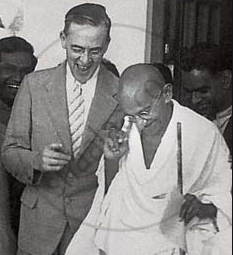
(i) Name the male personality in the picture with Gandhi given alongside.
(ii) Why Britain Prime Minister sent this gentleman to India?
Which of the following countries will NOT be part of this cartoon?