Advertisements
Advertisements
प्रश्न
Show that `sin^-1 (- 3/5) - sin^-1 (- 8/17) = cos^-1 (84/85)`
बेरीज
Advertisements
उत्तर
`sin^-1 (- 3/5) - sin^-1 (- 8/17)`
= `- sin^-1 (3/5) + sin^-1 (8/17)`
= `sin^-1 (8/17) - sin^-1 (3/5)`
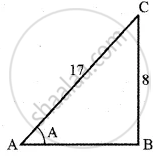
AB = `sqrt(17^2 - 8^2) = sqrt225` = 15
Let `sin^-1 (8/17)` = A
`8/17` = sin A
sin A = `8/17`
∴ cos A = `15/17`
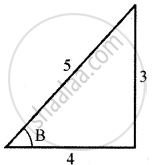
Let `sin^-1 (3/5)` = B
sin B = `3/5`
∴ cos B = `4/5`
Consider cos(A – B) = cos A cos B + sin A sin B
`= 15/17 xx 4/5 + 8/17 xx 3/5`
`= 60/85 + 24/85`
cos (A – B) = `84/85`
∴ A – B = `cos^-1 (84/85)`
i.e., `sin^-1 (8/17) - sin^-1 (3/5) = cos^-1 (84/85)`
i.e., `sin^-1 (-3/5) - sin^-1 (-8/17) = cos^-1 (84/85)`
shaalaa.com
या प्रश्नात किंवा उत्तरात काही त्रुटी आहे का?
