Advertisements
Advertisements
प्रश्न
Regarding archaeological sources to reconstruct the Age of the Gupta, explain what significance do the following have:
Nalanda University
Advertisements
उत्तर
It was the most renowned educational institution of ancient India. Located at Nalanda in Rajagriha in Bihar, it was originally set up by Sakraditya in the 5th century AD during the reign of Kumaragupta-I. The University of Nalanda had imposing buildings. There were at least 8 colleges built by different patrons including one by Balaputradeva, King of Sumatra. According to Hiuen Tsang, the whole university area was enclosed by a brick wall. Nalanda University provided various facilities to the students for their studies. There were three great libraries called Ratnasagar, Ratnodadhi, and Ratnaranjak. There were more than 10,000 students including teachers of all kinds. They came from Korea, Mongolia, Japan, China, Tibet, Ceylon, and various parts of India. The subjects of study at Nalanda University were all four Vedas, logic, grammar, medicine, Samkhya, yoga, Nyaya, and the Buddhist works of the different schools. It was not an ordinary university. It was a post-graduate institution to which admission was very difficult. Before admission, an examination was held in which hardly 20% of students passed and the rest of 80% were rejected. Only the most brilliant was admitted to the University. Nalanda continued to be a beacon of light up to 12th century AD when it was destroyed by Mohammad-bin- Bakhtiyar Khilji, a general of Mohammad Ghori. Today only the remains of its magnificence and glory can be seen.
संबंधित प्रश्न
Mention the contributions of Aryabhatta in the field of astronomy.
Mention the important contributions of Varahamihira.
Name three important sciences which made great progress during the Gupta period.
Mention two places famous for the art of painting during the Gupta period.
With reference to Nalanda University answer the following questions:
Give three of its special features?
Study the picture given here and answer the following question:
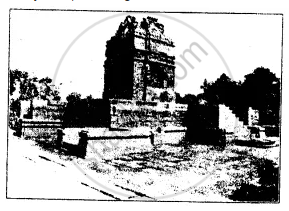
Which period does it belong to?
The Pallava period recorded brilliant achievements in the fields of literature, art and architecture. In this context explain:
Contributions in the field of architecture.
Study the picture of Dharmaraja Ratha and answer the following questions:
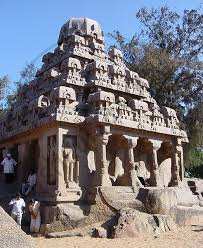
When was it built?
What contribution did Varahamihira make in the field of science, astronomy, and mathematics?
Mention three important kingdoms that came to power in India between 320 BC and AD 162.
