Advertisements
Advertisements
प्रश्न
Obtain the expression for half-life and rate constant of the first-order reaction.
Advertisements
उत्तर
k = `2.303/t log_10 [A]_0/[A]_t`
Where, `[([A]_0 = "Initial concentration"),([A]_t = "Final concentration")]`
At, t = `t_(1/2), [A]_t = [A]_0/2`
k = `2.303/t_(1/2) log_10 [A]_t/([A]_0/2)`
k = `2.303/t_(1/2) xx log_10 2`
= `2.303/t_(1/2) xx 0.3010`
`t_(1/2) = 0.693/k`
APPEARS IN
संबंधित प्रश्न
Answer the following in one or two sentences.
Write the relationships between rate constant and half-life of the first order and zeroth-order reactions.
In a first-order reaction, the concentration of the reactant decreases from 20 mmol dm−3 to 8 mmol dm−3 in 38 minutes. What is the half-life of reaction?
Solve
The half-life of a first-order reaction is 1.7 hours. How long will it take for 20% of the reactant to react?
For the reaction 2NOBr → 2NO2 + Br2, the rate law is rate = k[NOBr]2. If the rate of a reaction is 6.5 × 10⁻⁶ mol L–1 s–1, when the concentration of NOBr is 2 × 10⁻³ mol L–1. What would be the rate constant of the reaction?
Derive an expression for the relation between half-life and rate constant for first-order reaction.
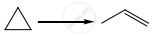
This reaction follows first-order kinetics. The rate constant at particular temperature is 2.303 × 10⁻² hour−1. The initial concentration of cyclopropane is 0.25 M. What will be the concentration of cyclopropane after 1806 minutes? (log 2 = 0.3010)
The time for half change in a first order decomposition of a substance A is 60 seconds. Calculate the rate constant. How much of A will be left after 180 seconds?
The integrated rate law is a direct relationship between ____________ and ____________.
What is the value of rate constant of first order reaction, if it takes 15 minutes for consumption of 20% of reactants?
The following reactions follow zero order kinetics, EXCEPT ____________.
How long would it take to electroplate a spoon with 0.1 mol of silver (108 g/mol) at a constant current of 2.0 A using AgNO3?
Which among the following reaction is an example of a zero order reaction?
If [A] is the concentration of A at any time t and [A]0 is the concentration at t = 0, then for the 1st order reaction, the rate equation can be written as ____________.
In a first order reaction, the concentration of the reactant is reduced to 25% in one hour. The half-life period of the reaction is ____________.
Which of the following represents the expression for `(3/4)^"th"` life of 1st order reaction?
The order of the reaction for which the unit of rate constant is s−1 is ____________.
A first order reaction is 75% completed in 60 minutes, the time required for it's 50% completion is ____________.
For a zero order reaction, the plot of [A]t vs t is linear. The slope of the line is equal to ____________.
The rate of formation of B at time t for reaction \[\ce{2A -> 3B}\] is equal to ____________.
Which among the following is an example of zero order reaction?
For a first order reaction, \[\ce{A -> B}\], if [A] = 1 M and rate is 4 × 10⁻² M s−1. What is the rate constant of the reaction?
In a reaction \[\ce{N2_{(g)} + 3H2_{(g)} -> 2NH3_{(g)}}\], if the rate of disappearance of N2(g) is 2.6 × 10⁻⁴ M/s, the rate of disappearance of H2(g) in M/s is ____________.
For the first order reaction A → B, the rate constant is 0.25 s-1, if the concentration of A is reduced to half, the value of rate constant will be ________.
A certain zero order reaction has rate constant 0.025 M s-1. What will be the concentration of reactant 'A' after 15 seconds, if initial concentration is 0.50 M?
Half-life of first-order reaction \[\ce{X -> Y + Z}\] is 3 minutes. What is the time required to reduce the concentration of 'X' by 90 % of it's initial concentration?
Half-life of a first order reaction is 30 minutes and initial concentration of reactant is 0.1 M.
What is half-life of the reaction if initial concentration of reactant is doubled?
The half-life of first order reaction is 1.7 hour. What is its rate constant?
The plot that represents the zero order reaction is:
For a first order reaction, the plot of log k against 1/T is a straight line. The slope of the line is equal to ______.
