Advertisements
Advertisements
प्रश्न
Match the following.
| Reserved forests | other forests and wastelands belonging to both government and private individuals and communities |
| Protected forests | forests are regarded as most valuable as far as the conservation of forest and wildlife resources |
| Unclassed forests | forest lands are protected from any further depletion |
Advertisements
उत्तर
| Reserved forests | forests are regarded as most valuable as far as the conservation of forest and wildlife resources |
| Protected forests | forest lands are protected from any further depletion |
| Unclassed forests | other forests and wastelands belonging to both government and private individuals and communities |
APPEARS IN
संबंधित प्रश्न
Match the following animals with their category of existence.
| Animals/Plants | Category of existence |
| Black buck | Extinct |
| Asiatic elephant | Rare |
| Andaman wild pig | Endangered |
| Himalayan brown bear | Vulnerable |
| Pink head duck | Endemic |
Where would you find the following in India:
Asiatic lion
Mention any five biosphere reserves in India.
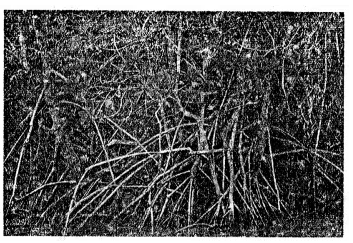
- Identify the type of forest shown in the photograph.
- Write two characteristics of this type of forest.
Write short notes on :
Mountain or Alpine forest
Write short notes on :
Afforestation or Vana Mahotsava
Define with example:
Sanctuary
Fill in the blank:
There are about ___________ species of plants and animals in India.
Sariska wildlife sanctuary is located in which state?
Forests and wastelands belonging to both private individuals and government are known as ______.
Which of the following species was included for the first time in list of protected species in 1991?
In which of the following states, a very high percentage of its forests is managed by local communities?
What is the Himalayan Yew?
We need to conserve our forests and wildlife ______.
Which is not a threat to tiger population in India?
One of the key wildlife species in the faunal web is ______.
The total number of tiger reserves in India are ______.
Periyar Tiger Reserve is in the state of ______.
On the given Map of India, locate and label the following:
Pune Software Technology Park.

