Advertisements
Advertisements
प्रश्न
Look at these pictures of cyclones, floods, earthquakes, and tsunamis.
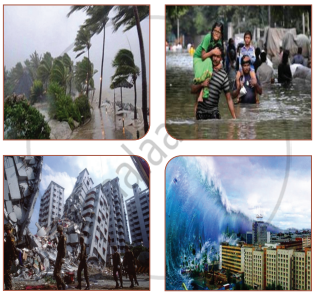
Discuss in pairs for two minutes any one of these natural disasters. You may use the following points.
- Causes
- Damages
- Precautions.
Advertisements
उत्तर
Floods:
Floods are an overabundance of water in an otherwise dry area. A flood can be caused by large quantities of water gushing from a water body, such as ocean, rivers, lakes, or ponds, which can swell due to heavy rainfall or mountain snowmelt. If the rivers and lakes receive too much rain then the water will not be confined within their banks. It will flow into the drylands, causing huge destruction.
Flash floods are short-term, intense, and quickly-developing floods. Sudden thunderstorms create temporary puddles of water everywhere and cause small rivers and lakes to swell. In coastal areas, cyclones often cause upheavals in the water level. This creates a giant wall of water heading toward land. Depending on the size of the tide and how hard it hits land, it can often be a dangerous phenomenon, literally washing away buildings and structures along the coast.
In flood-prone areas, the following actions need to be taken:
- Protect your home – elevate the electric appliances, install check valves in sewer traps, seal
walls in basements to avoid seepage, store adequate food, candles, and drinking water. - Listen to radio/TV emergency alerts and instructions.
- Seek higher grounds and be ready to evacuate if instructed.
- Do not try to drive through a flooded road. If your vehicle stalls, abandon it and seek an alternate route.
- After a flood, stay away from floodwater.
- Be aware of areas where water has receded. Roads may have weakened or power lines may have fallen.
- Do not drink tap water until hygiene standards are guaranteed by the health department.
- Clean the home, especially the kitchen with safe chemical cleaners.
APPEARS IN
संबंधित प्रश्न
Why do you think Achrekar punished Sachin?
A girl came out of the house.
Identify the character or speaker of the following line.
She was given test after test in geography.
What did the narrator do to get rid of the evidence?
Tom was disturbed because ______.
How did the medicine diminish?
What does the writer compare water in a landscape to?
Are animals happy in wild life rehabilitation centres?
Why are the freedom fighters under Gandhi not afraid of anything?
Explain the important elements of Nehru’s letter.
