Advertisements
Advertisements
प्रश्न
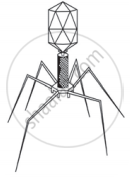
Identify the following diagram, label it and write detail information in your words:

Advertisements
उत्तर
Agaricus:

- It belongs to class basidiomycetes of the kingdom Fungi.
- It has branched septate hyphae.
- It grows in soil, on rotten wood, etc.
- It is edible and rich in proteins.
- Vegetative reproduction takes place by fragmentation.
APPEARS IN
संबंधित प्रश्न
Answer the following:
What are the salient features of monera?
Answer the following:
What will be the shape of bacillus and coccus type of bacteria?
Answer the following:
Why is binomial nomenclature important?
Write short notes:
Useful and harmful bacteria
Write short note:
Five Kingdom system
Complete tree diagram in detail:

Draw a neat labelled diagram:
Euglena
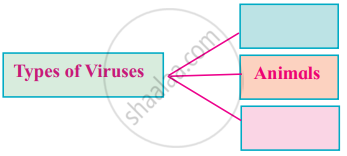
Complete chart and explain in your word: Types of Viruses
Identify the following diagram, label it and write detail information in your words:

Identify the following diagram, label it and write detail information in your words:

Identify the following diagram, label it and write detail information in your words:
Identify the following diagram, label it and write detail information in your words:

Match the following:
| Kingdom | Example |
| i. Monera | a. Riccia |
| ii. Protista | b. Cyanobacteria |
| iii. Plantae | c. Rhizopus |
| iv. Fungi | d. Diatoms |
Complete the following:
____________ - Entamoeba
Match List I with List II -
| List-I | List-II |
| A. Rhizopus | I. Mushroom |
| В. Ustilago | II. Smut fungus |
| C. Puccinia | IIΙ. Bread mould |
| D. Agaricus | IV. Rust fungus |
