Advertisements
Advertisements
प्रश्न
How will you separate a mixture of iron filings and powdered carbon ?
Advertisements
उत्तर
We can separate a mixture of iron filings and powdered carbon by using a magnet. The principle behind the separation of iron fillings and powdered carbon is the property of iron to get attracted by magnets. When the magnet is brought close to the mixture, iron fillings are attracted by the magnet and get collected on the surface of the magnet. In the process, powdered carbon is left behind as residue.
APPEARS IN
संबंधित प्रश्न
Define the following term of Atom .
What are the characteristics of matter?
Explain why, osmosis can be considered to be a special kind of diffusion. Classify the following into
(i) osmosis, and (ii) diffusion :
- swelling up of a raisin on keeping in water
- spreading of virus on sneezing
- earthworm dying on coming in contact with common salt
- shrinking of grapes kept in thick sugar syrup
- preserving of pickles in salt
- spreading of smell of cake being baked in the kitchen
- aquatic animals using oxygen dissolved in water during respiration
State two physical properties on the basis of which metals can be distinguished from non-metals.
Which of the following are not compounds ?
Chlorine gas, Potassium chloride, Iron powder, Iron sulphide, Aluminium foil, Iodine vapour, Graphite, Carbon monoxide, Sulphur powder, Diamond
Out of a colloid, solution and a suspension :
which one has the largest particles ?
21.5 g of sodium chloride dissolves in 60 g of water at 25°C. Calculate the solubility of sodium chloride in water at that temperature.
Which of the following do not exhibit Tyndall effect ?
Starch solution, Sugar solution, Ink, Salt solution, Copper sulphate solution, Ammonium chloride solution, Fog, Smoke, Car exhausts.
One of the following is a solid foam. This one is :
One of the following does not show Tyndall effect. This one is :
State whether the following statement are true or false :
Alcohol can be separated from a mixture of alcohol and water by a separating funnel.
A carpenter wants to separate iron nails from saw-dust. Which method of separation should he choose ?
How is the impurity of iron present in several substances removed in industries ?
Differentiate between the-two characteristics of matter – ‘mass’ & ‘weight’.
Justify your answer.
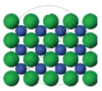
| Figure 1 | Figure 2 | Figure 3 |
 |
 |
 |
The arrangement of particles in three different phases of matter is shown above.
- Which state is represented by Fig. 1?
- In which state will the inter-particle attraction be maximum?
- Which one of them cannot be contained in an open vessel?
- Which one can take the shape of its container?
Diffentiate between absorption and adsorption.
Non-metals are usually poor conductors of heat and electricity. They are non-lustrous, non-sonorous, non-malleable and are coloured.
Name a non-metal which exists as a liquid at room temperature.
Higher the temperature, the higher the kinetic energy of particles.
The phenomenon of Evaporation takes place at the ______ of a liquid.
Define the term matter.
