Advertisements
Advertisements
प्रश्न
Here are some naming words that denote the person, place and things in common
Advertisements
उत्तर
- boy
- pen
- city
- fruit
- book
- king
- animal
- bird
- game
APPEARS IN
संबंधित प्रश्न
Join the sentence using appropriate Co-ordinators. (but, or, so, and)
There was a lack of technology. Major surgery could not develop for centuries.
Find the opposite of the following word from the lesson.
begun
Rearrange the words in the correct order to make a meaningful sentence.
allergic / dogs / Rani / though / is / to / of / six / she / them / has.
Look at the words in the box. Fill the wheel with their antonyms.
All the words begin with ‘S’ and are from the text
| hard | fat | weak | big | fast | hide | rough | dull |
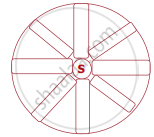
Read the sentence carefully and fill in the blank with suitable tense form of the verb given in bracket.
The doorbell rang, while I ______(do) my homework.
Write the past continuous forms for the given verb.
She ________ the homework at 6 ‘o’ clock. (write)
Fill in the blank with suitable homophone:
I need a ______of water to wash these cups.
Add appropriate question tags and role play the dialogue with your friend.
| Jeyanth | Hello, Anish! It’s your Physics exam today,______ |
| Anish | Yes. They had set a very long paper. Yet, I managed to finish the paper. |
| Jeyanth | True. My maths paper too was very long. I couldn’t finish it. |
| Anish | I too could not complete my paper. |
| Jeyanth | Ok. Actually, my question paper was very easy. |
| Anish | Mine wasn’t easy. I made a silly mistake. |
| Jeyanth | Tell me about your English paper. |
| Anish | The story comprehension was very easy. I am sure to score more than ten marks on fifteen. I wrote it very well. There wouldn’t be any mistake. |
| Jeyanth | For me, my letter-writing was the best. I didn’t make a single mistake. |
| Anish | Ok. I’ve got lots to study for tomorrow’s exam. |
| Jeyanth | Me too. So, see you later. All the best, bye. |
| Anish | Thank you. Wish you the same, bye. |
Now, Blend the following word.
motor + pedal
Rewrite each of the following sentence using the superlative degree retaining the meaning.
The peacock is more colourful than any other bird found in India.
