Advertisements
Advertisements
प्रश्न
Given below is a diagram of a human blood smear.
Study the diagram and answer the questions that follow:

a) Name the components numbered ‘1’ to ‘4’
b) Mention two structural differences between the parts ‘1’ and ‘2’.
c) Name the soluble protein found in part ‘4’ which forms insoluble threads during clotting of blood.
d) What is the average lifespan of the component numbered ‘1’ ?
e) Component numbered ‘1’ do not have certain organelles but are very efficient in their function. Explain
Advertisements
उत्तर
a)
- RBC
- Neutrophil
- Blood platelets
- Blood plasma
b)
| RBC | Neutrophil |
| Biconcave, disc-shaped | Amoeboid |
| Do not have nucleus | Have 3-5 lobbed nucleus |
c) Fibrinogen
d) 120 days
e) RBCs do not have a nucleus, endoplasmic reticulum and mitochondria. They are very efficient in carrying nutrients like glucose (which they cannot use, due to lack of mitochondria), can easily pass through the capillaries (lack of endoplasmic reticulum - endoskeleton)
APPEARS IN
संबंधित प्रश्न
When a doctor is recording your pulse, he is pressing on your wrist exactly on a
Name the following:
The blood vessels which start from capillaries and end in capillaries.
What is diastole?
During surgical operations or during accidents, the patient may be given blood from outside to save his life. What is the technical name of this process? Briefly explain the precautions to be taken in this process.
Draw well labeled diagrams of part Artery and Superior vena cava to show the structural.
Respiration takes place because of its up and down movement.
Granulocytes are also known as ____________.
Ventricles have ______ walls when compared with those of auricles.
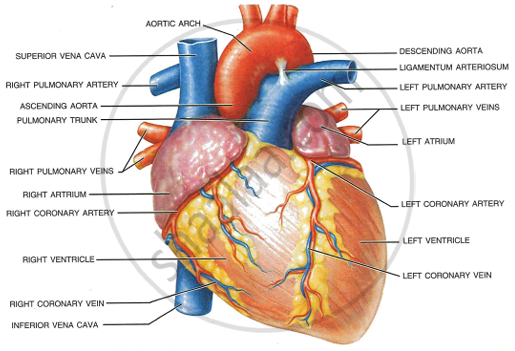 |
Can you answer why the pulmonary artery shown in Fig. is blue in colour?
Name the following:
The structure that holds the heart valves in position.
