Advertisements
Advertisements
प्रश्न
Give Reasons
Most often only one embryo is formed at a time although there are two ovaries in women. Explain.
Advertisements
उत्तर
One ovum under the influence of hormones is released alternatively every month.
संबंधित प्रश्न
Fill in the blank:
Lower part of uterus is called _________.
Estrogen is secreted by ______
Tubectomy is carried out by blocking the ______
Read the following and answer from given below:
During copulation, semen is released by the penis into the vegina. The motile sperms swim rapidly, fuse with the ovum in the ampullary region, resulting in fertilization. The haploid nucleus of sperm fuses with that of the ovum to form a diploid zygote.
Select the correct sequence of various physical and chemical events that take place during fertilisation.
P. Fusion of cortical granules with the plasma membrane of secondary oocyte.
Q. Formation of fertilization cone to receive sperm.
R. Release of sperm lysin from acrosome.
S. Mixing up of chromosomes of a sperm and an ovum.
In the given Figure label the parts and mention their functions
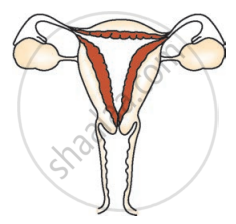
- Production of egg
- Site of fertilisation
- Site of implantation
- Entry of the sperms
How does fertilisation take place? Fertilisation occurs once in a month. Comment.
Female reproductive organs and associated functions are given below in column A and B. Fill the blank boxes.
| Column A | Column B |
| Ovaries | Ovulation |
| Oviduct | a |
| b | Pregnancy |
| Vagina | Birth |
Given below are the structural details of a human mammary gland:
- The glandular tissue in the breast has 15-20 clusters. of cells called alveoli.
- The milk is stored in the lumen of the alveoli.
- The alveoli join to form the mammary ducts.
- Mammary ampulla is connected to lactiferous ducts.
Choose the option that gives the correct detail of the human mammary gland.
Given below is a group of terms. In the group, one pair indicates the relationship between the two terms. Rewrite and complete the second pair on a similar basis.
Leydig cells : Testosterone : ______ : Oestrogen.
Write the specific location of the following:
Vagina
