Advertisements
Advertisements
प्रश्न
Explain the following concept.
Right-based approach
Advertisements
उत्तर १
Since 2000, the approach towards democratic reform has evolved to be right-based. Democratic reforms are necessitated as the ‘rights’ of the citizen, instead of being approached as a part of the Directive principle of State policy. Citizens can take the government to court in case their ‘rights’ are not met, and thus, this change in approach has strengthened our democracy and made the government. more accountable to the public. People now have the Right to Information, Right to Food, Right to Education and thus are more participative in the democratic processes.
उत्तर २
- In the decades after independence, efforts were made towards the democratisation of India.
- In this process, citizens were considered ‘beneficiaries’ of reforms.
- In the last few decades, this approach has changed, and the democratic reforms that lead to development are considered the ‘rights’ of citizens.
- Accordingly, citizens in India have the Right to Education, the Right to Information, and the Right to Food Act.
APPEARS IN
संबंधित प्रश्न
Explain whether the statement is true or false with reason.
Right to information has reduced the element of secrecy.
State whether the following statement is true or false. Give reasons for your answer:
Secrecy in the working of Government has increased due to the Right to Information.
Explain the following concept:
Right to information
What are the effects of reducing the voting age from 21 years to 18 years?
Which information can be secured with the help of the Right to Information? Find out with the help of your teachers.
State whether the following statement is true or false. Give reasons for your answer.
Indian democracy is considered the largest democracy in the world.
Complete the activity.
Complete the following diagram:

The ______ has made the government more transparent and has reduced the element of secrecy in its work.
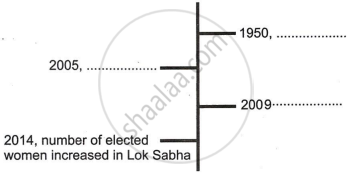
Complete the given timeline.
Explain the following concept.
Decentralisation of democracy
