Advertisements
Advertisements
प्रश्न
Evaluate: `cos (sin^-1 (4/5) + sin^-1 (12/13))`
बेरीज
Advertisements
उत्तर
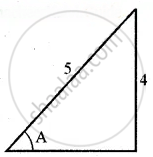
`sqrt(5^2 - 4^2)` = 3
cos A = `"Adj"/"Hyp" = 3/5`
Let `sin^-1 (4/5)` = A
sin A = `4/5`
∴ cos A = `3/5`
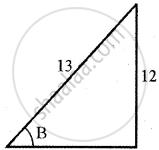
`sqrt(169 - 144) = sqrt 25` = 5
cos B = `"Adj"/"Hyp" = 5/13`
Let `sin^-1 (12/13)` = B
`12/13` = sin B
sin B = `12/13`
∴ cos B = `5/13`
Now `cos (sin^-1 (4/5) + sin^-1 (12/13))` = cos (A + B)
= cos A cos B – sin A sin B
`= 3/5 xx 5/13 - 4/5 xx 12/13`
`= 15/65 - 48/65`
`= - 33/65`
shaalaa.com
या प्रश्नात किंवा उत्तरात काही त्रुटी आहे का?
