Advertisements
Advertisements
प्रश्न
Describe any six occasions when a batsman may be declared out.
Explain the following term:
Run out
Advertisements
उत्तर
A batsman might be declared out of cricket on multiple occasions. Here are six main ways a batsman can be dismissed:
- Caught: If a fielder catches the ball on the full after the batsman has hit it with his bat. However, if the fielder catches the ball, but either during the catch or immediately afterwards touches or steps over the boundary, then the batsman scores six runs and is not out.
- Bowled: If the batsman misses the ball and it hits and breaks the wicket directly from the bowler's delivery.
- Leg before wicket: The batsman is out if the ball meets any part of their body and the umpire decides that the ball would have hit the stumps had it been placed in line with the stumps or outside the off-stump.
- Stumped: If a batsman misses the ball and in attempting to play it; steps outside his crease, he is out stumped if the wicket-keeper gathers the ball and breaks the wicket with it before the batsman can ground part of his body or his bat behind his crease.
- Run Out: If a batsman is attempting to take a run, or to return to his crease after an aborted run and a fielder breaks that batsman's wicket with the ball while he is out of the crease. The fielder may either break the wicket with a hand which holds the ball, or with the ball directly.
- Hit Wicket: If, in attempting to hit a ball or taking off for a first run, the batsman touches and breaks the wicket. This includes with the bat or dislodged pieces of the batsman's equipment- even a helmet or spectacles!
Notes
Students should refer to the answer according to their questions.
संबंधित प्रश्न
Write down any three fielding positions on the Leg side in cricket.
What is significance of inner circle on the cricket field?
During a match, there is a close call for a run-out. The umpire on the field is unable to take a decision. What should the umpire on the field do in this situation?
What is the signal of the main umpire for the following?
Leg bye
Identify the following umpire signal.

Identify the following umpire signal.
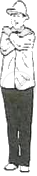
Briefly explain the following term:
Handling the ball
When is a batsman considered to be out bowled?
What is the signal for the following:
Short run
What is the signal for the following:
Power play
