Advertisements
Advertisements
प्रश्न
Damjibhai’s son Hasmukh chose to become a farmer like his father. Hasmukh’s son Paresh is not a farmer, but a truck driver. Why would he have done so?
Advertisements
उत्तर
Paresh could see that his father was running into losses. Farming had become a capital-intensive activity with little profit. Hence, Paresh would have decided to switch to a new occupation.
APPEARS IN
संबंधित प्रश्न
Are rotis made in your home? From which grains are they made?
Talk to the elders in your family and find out if there were some special foods cooked earlier that are not cooked anymore?
Find out about the crops - cereals, vegetables, pulses - that are grown in your area. Of those, is there anything that is famous across the country?
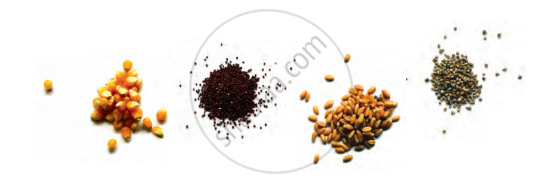
Can you recognize these grains?
What kind of progress would you like to see in your area?
The seeds were not sure that what Hasmukh was talking about was really progress. What do you feel?
What questions come to your mind about farmers and farming? Write some questions in your group and ask a farmer. For example, how many crops do they grow in a year? Which crop needs how much water?
Visit a farm near your area. Observe and talk to the people there. Write a report.
What would happen if all the farmers were to use only one kind of seed and grow only one kind of crop?
What technology could have been used to cut the stem in picture 1?
