Advertisements
Advertisements
प्रश्न
Copy the figure given here.

Take any one diagonal as a line of symmetry and shade a few more squares to make the figure symmetric about a diagonal. Is there more than one way to do that? Will the figure be symmetric about both the diagonals?
Advertisements
उत्तर
We can shade a few more squares so as to make the given figure symmetric about any of its diagonals.
Yes, the figure is symmetric about both the diagonals. There is more than one way so as to make the figure symmetric about a diagonal as we can choose any of its 2 diagonals.

संबंधित प्रश्न
Copy the figure with punched holes and find the axes of symmetry for the following:

Given the line of symmetry, find the other hole:
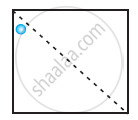
Given the line of symmetry, find the other hole:
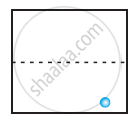
Given the line of symmetry, find the other hole:
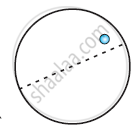
Copy the diagram and complete the given shape to be symmetric about the mirror line(s):
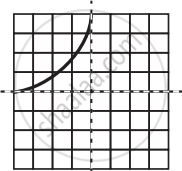
State the number of lines of symmetry for a circle figure.
Complete the other half of the following figure such that the dotted line is the line of symmetry.
How many lines of symmetry for the following figure
The number of lines of symmetry in the figure given below is ______.

An isosceles trapezium has one line of symmetry.
