Advertisements
Advertisements
प्रश्न
A man bought some pencils for Rs 30 and some pens for Rs 90. The next day, he again bought some pencils for Rs 25. Then, he sold all the pencils for Rs 20 and the pens for Rs 70. What was his net gain or loss?
Advertisements
उत्तर
Total cost price = Price of pencils + Price of pens
= 30 + 90 + 25
= Rs 145
Total amount sold = Price of pen + Price of pencils
= 20 + 70
= 90
Selling price - costing price = 90 - 145
= -55
The negative sign implies loss.
Hence, his net loss was Rs 55.
APPEARS IN
संबंधित प्रश्न
Verify a − (−b) = a + b for the following values of a and b.
a = 75, b = 84
Indicate the following using '+' or '−' sign: Decrease of 9
Find the sum of: −389 and −1032
Find the sum of: −18, + 25 and −37
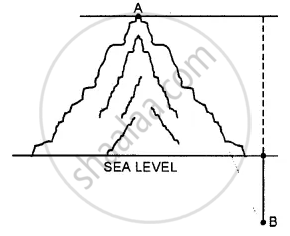
The point A is on a mountain which is 5700 metres above sea level and the point B is in a mine which is 39600 metres below sea level. Find the vertical distance between A and B.
Multiply: –56 by 16
In the pair given below, find the larger integer.
Write 'T' for true and 'F' for false for the following:
0 is neither positive nor negative.
Amulya and Amar visited two places A and B respectively in Kashmir and recorded the minimum temperatures on a particular day as –4°C at A and –1°C at B. Which of the following statement is true?
Next three consecutive numbers in the pattern 11, 8, 5, 2, --, --, -- are ______.
