Advertisements
Chapters
![NCERT solutions for मैथमैटिक्स [अंग्रेजी] कक्षा ६ chapter 2 - Whole Numbers - Shaalaa.com](/images/mathematics-english-class-6_6:0797baf62bd6489d8c888098e76ae949.jpg "NCERT solutions for मैथमैटिक्स [अंग्रेजी] कक्षा ६ chapter 2 - Whole Numbers")
Advertisements
Solutions for Chapter 2: Whole Numbers
Below listed, you can find solutions for Chapter 2 of CBSE NCERT for मैथमैटिक्स [अंग्रेजी] कक्षा ६.
NCERT solutions for मैथमैटिक्स [अंग्रेजी] कक्षा ६ 2 Whole Numbers Exercise 2.1 [Page 31]
Write the next three natural numbers after 10999.
Write the three whole numbers occurring just before 10001.
Which is the smallest whole number?
How many whole numbers are there between 32 and 53?
Write the successor of 2440701.
Write the successor of 100199.
Write the successor of 1099999.
Write the successor of 2345670.
Write the predecessor of 94.
Write the predecessor of 10000.
Write the predecessor of 208090.
Write the predecessor of 7654321.
In the following pairs of numbers, a state in which the whole number is on the left of the other number is on the number line. Also write it with the appropriate sign (>, <) between them.
530, 503
>
<
In the following pairs of numbers, a state in which the whole number is on the left of the other number is on the number line. Also write it with the appropriate sign (>, <) between them.
370, 307
>
<
In the following pair of number, a state in which the whole number is on the left of the other number is on the number line. Also write it with the appropriate sign (>, <) between them.
98765, 56789
>
<
In the following pair of number, a state in which the whole number is on the left of the other number is on the number line. Also write it with the appropriate sign (>, <) between them.
9830415, 10023001
>
<
Is the following statement true (T) or false (F)?
Zero is the smallest natural number.
Is the following statement true (T) or false (F)?
400 is the predecessor of 399.
Is the following statement true (T) or false (F)?
Zero is the smallest whole number.
Is the following statement true (T) or false (F)?
600 is the successor of 599.
Is the following statement true (T) or false (F)?
All natural numbers are whole numbers.
Is the following statement true (T) or false (F)?
All whole numbers are natural numbers.
Is the following statement true (T) or false (F)?
The predecessor of a two-digit number is never a single-digit number.
Is the following statement true (T) or false (F)?
1 is the smallest whole number.
Is the following statement true (T) or false (F)?
The natural number 1 has no predecessor.
Is the following statement true (T) or false (F)?
The whole number 1 has no predecessor.
Is the following statement true (T) or false (F)?
The whole number 13 lies between 11 and 12.
Is the following statement true (T) or false (F)?
The whole number 0 has no predecessor.
Is the following statement true (T) or false (F)?
The successor of a two-digit number is always a two-digit number.
NCERT solutions for मैथमैटिक्स [अंग्रेजी] कक्षा ६ 2 Whole Numbers Exercise 2.2 [Pages 40 - 41]
Find the sum by suitable rearrangement:
837 + 208 + 363
Find the sum by suitable rearrangement:
1962 + 453 + 1538 + 647
Find the product by suitable rearrangement:
2 × 1768 × 50
Find the product by suitable rearrangement:
4 × 166 × 25
Find the product by suitable rearrangement:
8 × 291 × 125
Find the product by suitable rearrangement:
625 × 279 × 16
Find the product by suitable rearrangement:
285 × 5 × 60
Find the product by suitable rearrangement:
125 × 40 × 8 × 25
Find the value of the following:
297 × 17 + 297 × 3
Find the value of the following:
54279 × 92 + 8 × 54279
Find the value of the following:
81265 × 169 – 81265 × 69
Find the value of the following:
3845 × 5 × 782 + 769 × 25 × 218
Find the product using suitable properties.
738 × 103
Find the product using suitable properties.
854 × 102
Find the product using suitable properties.
258 × 1008
Find the product using suitable properties.
1005 × 168
A taxi driver filled his car petrol tank with 40 litres of petrol on Monday. The next day, he filled the tank with 50 litres of petrol. If petrol costs ₹ 44 per litre, how much did he spend in all on petrol?
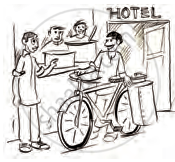
A vendor supplies 32 litres of milk to a hotel in the morning and 68 litres of milk in the evening. If the milk costs ₹ 15 per litre, how much money is due to the vendor per day?
Match the following:
| (i) 425 × 136 = 425 × (6 + 30 +100) | (a) Commutativity under multiplication. |
| (ii) 2 × 49 × 50 = 2 × 50 × 49 | (b) Commutativity under addition. |
| (iii) 80 + 2005 + 20 = 80 + 20 + 2005 | (c) Distributivity of multiplication over addition. |
NCERT solutions for मैथमैटिक्स [अंग्रेजी] कक्षा ६ 2 Whole Numbers Exercise 2.3 [Pages 43 - 44]
Which of the following will not represent zero?
1 + 0
Which of the following will not represent zero?
0 × 0
Which of the following will not represent zero?
`0/2`
Which of the following will not represent zero?
`(10 - 10)/2`
If the product of two whole numbers is zero, can we say that one or both of them will be zero? Justify through examples.
If the product of two whole numbers is 1, can we say that one or both of them will be 1? Justify through examples.
Find using distributive property:
728 × 101
Find using distributive property:
5437 × 1001
Find using distributive property:
824 × 25
Find using distributive property:
4275 × 125
Find using distributive property:
504 × 35
Study the pattern:
| 1 × 8 + 1 = 9 |
| 12 × 8 + 2 = 98 |
| 123 × 8 + 3 = 987 |
| 1234 × 8 + 4 = 9876 |
| 12345 × 8 + 5 = 98765 |
Write the next two steps. Can you say how the pattern works?
(Hint: 12345 = 11111 + 1111 + 111 + 11 + 1).
Solutions for 2: Whole Numbers
NCERT solutions for मैथमैटिक्स [अंग्रेजी] कक्षा ६ chapter 2 - Whole Numbers
Shaalaa.com has the CBSE Mathematics मैथमैटिक्स [अंग्रेजी] कक्षा ६ CBSE solutions in a manner that help students grasp basic concepts better and faster. The detailed, step-by-step solutions will help you understand the concepts better and clarify any confusion. NCERT solutions for Mathematics मैथमैटिक्स [अंग्रेजी] कक्षा ६ CBSE 2 (Whole Numbers) include all questions with answers and detailed explanations. This will clear students' doubts about questions and improve their application skills while preparing for board exams.
Further, we at Shaalaa.com provide such solutions so students can prepare for written exams. NCERT textbook solutions can be a core help for self-study and provide excellent self-help guidance for students.
Concepts covered in मैथमैटिक्स [अंग्रेजी] कक्षा ६ chapter 2 Whole Numbers are Fundamentals of Geometrical Concepts, Concept of Points, Line Segments, Concept of Lines, Rays, Comparing Angles, Formation of Rotating arms, Types of Angles, The Perpendicular, Measuring Angles, Concept of Angle Bisector, Construction of an Angle, Concept of Angle, Fundamentals of Geometrical Concepts, Concept of Points, Line Segments, Concept of Lines, Rays, Comparing Angles, Formation of Rotating arms, Types of Angles, The Perpendicular, Measuring Angles, Concept of Angle Bisector, Construction of an Angle, Concept of Angle.
Using NCERT मैथमैटिक्स [अंग्रेजी] कक्षा ६ solutions Whole Numbers exercise by students is an easy way to prepare for the exams, as they involve solutions arranged chapter-wise and also page-wise. The questions involved in NCERT Solutions are essential questions that can be asked in the final exam. Maximum CBSE मैथमैटिक्स [अंग्रेजी] कक्षा ६ students prefer NCERT Textbook Solutions to score more in exams.
Get the free view of Chapter 2, Whole Numbers मैथमैटिक्स [अंग्रेजी] कक्षा ६ additional questions for Mathematics मैथमैटिक्स [अंग्रेजी] कक्षा ६ CBSE, and you can use Shaalaa.com to keep it handy for your exam preparation.
