Please select a subject first
Advertisements
Advertisements
Chetandas tells that people from the basti used to come to clean the toilets and take away the waste. They were not allowed to enter the house.
- The people who used the toilets did not clean them. Discuss.
- Is there a toilet in your house? Who cleans it?
Concept: undefined >> undefined
What material have been used in making your house?
Concept: undefined >> undefined
Advertisements
Find out the material from which your friend's house is made? Is there any difference between your house and his house? Write about it.
Concept: undefined >> undefined
What kind of house do you think Chetandas' grandchildren will live in?
Concept: undefined >> undefined
Where would you like to live when you grow up? What kind of house would you like?
Concept: undefined >> undefined
You had written about the things that your grandparent’s house was made of. Has some of those materials been used in your house? Name them.
Concept: undefined >> undefined
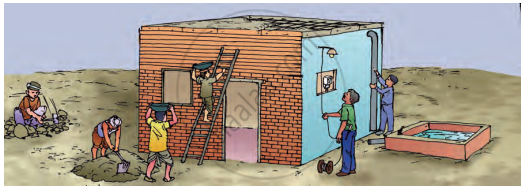
Look at the picture. People are given names according to the work they do. For example, a person who works with wood is called a carpenter.
In your place, what do you call a person who works with wood?
Concept: undefined >> undefined
Now, look at the picture and fill in the table.
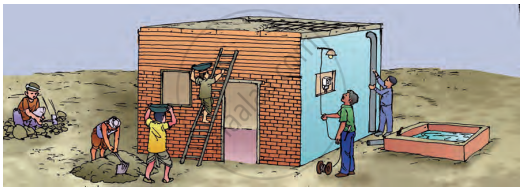
What kind of work is being done by different people here?
What tools are they shown using in the picture? Write them in the given table.
| Work | Tool | What is the person called |
| 1. | ||
| 2. | ||
| 3. | ||
| 4. |
Do you know people who do these type of work? Talk to them and find out about their work. Discuss it with your friends.
Concept: undefined >> undefined
With your teacher or someone from home, go to a place where a building is being constructed. Talk to the people working there and find out answers to these questions.
- What is being built there?
- How many people are working there?
- What kind of work are they doing?
- How many men and women are there?
- Are any children working there? What are they doing?
- How much money do these people get paid daily? Ask from any three different people.
- Where do these people live?
- What are the materials being used for making the building?
- Try and guess how many trucks of bricks and bags of cement will be used for making the building.
Concept: undefined >> undefined
How does the material reach the building site? (By truck, handcart, any other vehicle) List them.
Concept: undefined >> undefined
Find out the price of
| One bag of cement | ______ |
| One brick | ______ |
| One truck of sand | ______ |
Concept: undefined >> undefined
Ask a few other questions and write their answers.
Concept: undefined >> undefined
Over the sixty years, different materials were used at different times in Chetandas’ house. List these in the correct order.
Concept: undefined >> undefined
- Divide the children in the class into 3-4 groups. Let each group make a model of a different house. For this, you can use mud, wood, paper, pieces of cloth, shoe-boxes, match boxes and colours.
- Place all the houses so as to construct a neighbourhood colony.
Concept: undefined >> undefined

Look carefully at the picture of the river. Read the words given below.
Boat, flowing water, blue, fish, water-plants, river, foul smell, big ship, oil, river banks, factories, washing clothes, animals, other work, change, city.
Use these words to make a story. Give a title to your story also.
Concept: undefined >> undefined
Look at the pictures and answer the following questions:
- What is the colour of the river where it begins?
- At some places, there are many fish in the river, at others there are only a few and at some places, there are dead fish. What could be the reason for this? Discuss.
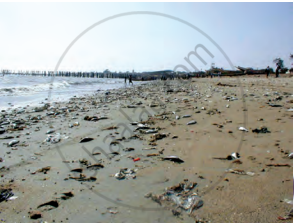
- What can be seen in the river before it reaches the village?
- At which places did the colour of the water in the river change? Why did this happen? Discuss.
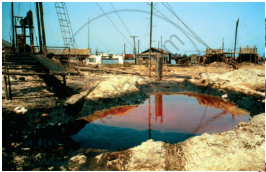
- Which of the places shown in the picture would you like to live in? Why?
- Would you like to change any of the things that you see in the picture? Why and how?
- Have you seen people throwing different things into rivers or water bodies?
- What could be done to keep rivers clean? Discuss.
- If you wanted to drink some water, from which part of the river would you like to drink? Why?
- In the last part of the picture, the river flows into the sea. Have you ever seen the sea? Where? In a movie, or somewhere else?
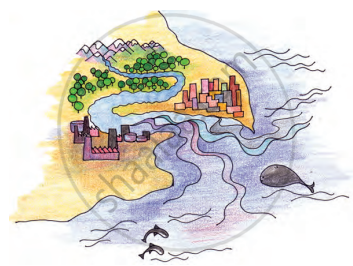
- Have you ever been near a river or sea? When?
- Show with your hands, how the waves in the sea move.
- Is the water from the sea drinkable? Why?
- Do you think that there would be changes taking place in a river, pond or stream at different times of the year? What kind of changes would these be? Discuss.
- Will there be the same amount of water in the ponds or rivers during the rainy season and in summer?
Concept: undefined >> undefined
Is there a pond, river or lake near your town or city? Find out -
- Are there any changes in the water during summers, the rainy season and in winters?
- What are the different kinds of water animals found there?
- What kind of trees and plants grows around it?
- What are the kinds of birds that come there?
- Have you ever seen or read about floods? Where?
- What happens when there is a flood?
- Have you seen dirty water in a river or pond? Where?
- How would you know if the water is dirty? If the water looks clean, can you be sure that it is alright to drink that water? Discuss.
Concept: undefined >> undefined
- From where do you get your drinking water? A river or a lake?
- Do you think that like the river in the picture your river or lake can also be affected?
Concept: undefined >> undefined
For this activity, you will need to bring certain things from your home. You will find most of these in the kitchen.
- 5 or 6 glasses or bottles.
- Salt, sugar, cooking soda, haldi, flour and dal (about half a teaspoon each).
- Lemon Juice, soap water, sherbet, oil (one spoonful each).
Concept: undefined >> undefined
Fill about half of each bottle or glass with water. Make sure that all have the same amount of water. Now, one by one put each of the things in the water. For example - haldi in the first glass, oil in the second glass, soda in the third glass until you have one thing in each glass. Mix each thing in the water and see what happens. Write your observations in the table.
What did you observe? Put (✓) mark in the right places.
| Things | Dissolved (mixed) in water | Did not dissolve in water | Colour of water changes | Colour of water does not change |
| Sugar | ||||
| Salt | ||||
| Lemon juice | ||||
| Haldi | ||||
| Soap water | ||||
| Flour | ||||
| Dal | ||||
| Sherbet | ||||
| Cooking soda | ||||
| Oil (Mustard, Til or any other) |
Now on the basis of your observations tell -
- Do all things dissolve in water?
- Does the colour of the water always change?
- Did oil dissolve in water?
How can you say whether it has dissolved or not?
Colour of the water may not change even after some things are dissolved in it. Would you say that these are absent in water?
Imagine how it would be if things like sugar, salt, lemon juice, sherbet, etc., could not dissolve in water?
Concept: undefined >> undefined
