हिंदी

Science (English Medium) कक्षा १२ - CBSE Question Bank Solutions for Chemistry

Advertisements
[object Object]
[object Object]
विषयों
मुख्य विषय
अध्याय
Advertisements
Advertisements
Chemistry
< prev  1741 to 1760 of 4805  next > 

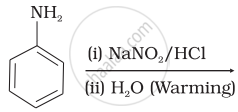
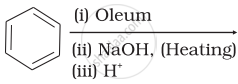
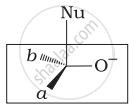
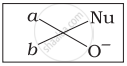
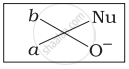
Identify ‘C’ in the following:

[7] Alcohols, Phenols and Ethers
Chapter: [7] Alcohols, Phenols and Ethers
Concept: undefined >> undefined

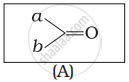
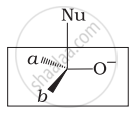
Which one of the following reactions is not explained by the open chain Structure of glucose?

[10] Biomolecules
Chapter: [10] Biomolecules
Concept: undefined >> undefined

Advertisements

In the following reaction, identify A and B:

\[\begin{array}{cc}
\ce{C6H12O6 ->[Acetic anhydride] A}\\
\downarrow \text{Conc. nitric acid}\phantom{...}\\
\ce{B}\phantom{.................}\end{array}\]

[10] Biomolecules
Chapter: [10] Biomolecules
Concept: undefined >> undefined

Given below are two statements labelled as Assertion (A) and Reason (R).

Assertion (A): Alkyl halides are insoluble in water.

Reason (R): Alkyl halides have halogen attached to sp3 hybrid carbon.

Select the most appropriate answer from the options given below:

[9] Amines
Chapter: [9] Amines
Concept: undefined >> undefined

Given below are two statements labelled as Assertion (A) and Reason (R).

Assertion (A): SO2 is reducing while TeO2 is an oxidising agent.

Reason (R): Reducing property of dioxide decreases from SO2 to TeO2.

Select the most appropriate answer from the options given below:

[8] Aldehydes, Ketones and Carboxylic Acids
Chapter: [8] Aldehydes, Ketones and Carboxylic Acids
Concept: undefined >> undefined

Assertion: Total number of octahedral voids present in unit cell of cubic close packing including the one that is present at the body centre, is four.

Reason: Besides the body centre there is one octahedral void present at the centre of each of the six faces of the unit cell and each of which is shared between two adjacent unit cells.

[1] Solid State
Chapter: [1] Solid State
Concept: undefined >> undefined

Which of the following curves is in accordance with Freundlich adsorption isotherm?

[5] Surface Chemistry
Chapter: [5] Surface Chemistry
Concept: undefined >> undefined

Freundlich adsorption isotherm is given by the expression `x/m = kp^(1/n)` which of the following conclusions can be drawn from this expression.

(i) When `1/n` = 0, the adsorption is independent of pressure.

(ii) When `1/n` = 0, the adsorption is directly proportional to pressure.

(iii) When n = 0, `x/m` vs p graph is a line parallel to x-axis.

(iv) When n = 0, plot of `x/m` vs p is a curve.

[5] Surface Chemistry
Chapter: [5] Surface Chemistry
Concept: undefined >> undefined

Which of the following statements is correct about the role of substances added in the froth floation process?

(i) Collectors enhance the non-wettability of the mineral particles.

(ii) Collectors enhance the wettability of gangue particles.

(iii) By using depressants in the process two sulphide ores can be separated.

(iv) Froth stabilisers decrease wettability of gangue.

[6] General Principles and Processes of Isolation of Elements
Chapter: [6] General Principles and Processes of Isolation of Elements
Concept: undefined >> undefined

In the Froth Floatation process, zinc sulphide and lead sulphide can be separated by:

(i) using collectors.

(ii) adjusting the proportion of oil to water.

(iii) using depressant.

(iv) using froth stabilisers.

[6] General Principles and Processes of Isolation of Elements
Chapter: [6] General Principles and Processes of Isolation of Elements
Concept: undefined >> undefined

Which of the following ores are concentrated by froth floation?

(i) Haematite

(ii) Galena

(iii) Copper pyrites

(iv) Magnetite

[6] General Principles and Processes of Isolation of Elements
Chapter: [6] General Principles and Processes of Isolation of Elements
Concept: undefined >> undefined

How do we separate two sulphide ores by Froth Floatation Method? Explain with an example.

[6] General Principles and Processes of Isolation of Elements
Chapter: [6] General Principles and Processes of Isolation of Elements
Concept: undefined >> undefined

Match items of Column I with the items of Column II and assign the correct code:

Column I Column II
(A) Cyanide process (1) Ultrapure \[\ce{Ge}\]
(B) Froth Floatation Process (2) Dressing of \[\ce{ZnS}\]
(C) Electrolytic reduction (3) Extraction of \[\ce{Al}\]
(D) Zone refining (4) Extraction of \[\ce{Au}\]
  (5) Purification of \[\ce{Ni}\]
[6] General Principles and Processes of Isolation of Elements
Chapter: [6] General Principles and Processes of Isolation of Elements
Concept: undefined >> undefined

Match items of Column I with the items of Column II and assign the correct code:

Column I Column II
(A) Sapphire (1) \[\ce{Al2O3}\]
(B) Sphalerit (2) \[\ce{NaCN}\]
(C) Depressan (3) \[\ce{Co}\]
(D) Corundum (4) \[\ce{ZnS}\]
  (5) \[\ce{Fe2O3}\]
[6] General Principles and Processes of Isolation of Elements
Chapter: [6] General Principles and Processes of Isolation of Elements
Concept: undefined >> undefined

Assertion: Sulphide ores are concentrated by Froth Flotation method.

Reason: Cresols stabilise the froth in Froth Flotation method.

[6] General Principles and Processes of Isolation of Elements
Chapter: [6] General Principles and Processes of Isolation of Elements
Concept: undefined >> undefined

In a cyclotrimetaphosphoric acid molecule, how many single and double bonds are present?

[7] P - Block Elements
Chapter: [7] P - Block Elements
Concept: undefined >> undefined

Why is nitric oxide paramagnetic in gaseous state but the solid obtained on cooling it is diamagnetic?

[7] P - Block Elements
Chapter: [7] P - Block Elements
Concept: undefined >> undefined

In the ring test of \[\ce{NO^{-}3}\] ion, \[\ce{Fe^{2+}}\] ion reduces nitrate ion to nitric oxide, which combines with  \[\ce{Fe^{2+} (aq)}\] ion to form brown complex. Write the reactions involved in the formation of brown ring.

[7] P - Block Elements
Chapter: [7] P - Block Elements
Concept: undefined >> undefined

\[\ce{P4O6}\] reacts with water according to equation \[\ce{P4O6 + 6H2O -> 4H3PO3}\]. Calculate the volume of 0.1 M NaOH solution required to neutralise the acid formed by dissolving 1.1 g of \[\ce{P4O6}\] in \[\ce{H2O}\].

[7] P - Block Elements
Chapter: [7] P - Block Elements
Concept: undefined >> undefined

Nitric acid forms an oxide of nitrogen on reaction with P4O10. Write the reaction involved. Also write the resonating structures of the oxide of nitrogen formed.

[7] P - Block Elements
Chapter: [7] P - Block Elements
Concept: undefined >> undefined
< prev  1741 to 1760 of 4805  next > 
Advertisements
Advertisements
CBSE Science (English Medium) कक्षा १२ Question Bank Solutions
Question Bank Solutions for CBSE Science (English Medium) कक्षा १२ Biology
Question Bank Solutions for CBSE Science (English Medium) कक्षा १२ Chemistry
Question Bank Solutions for CBSE Science (English Medium) कक्षा १२ Computer Science (C++)
Question Bank Solutions for CBSE Science (English Medium) कक्षा १२ Computer Science (Python)
Question Bank Solutions for CBSE Science (English Medium) कक्षा १२ English Core
Question Bank Solutions for CBSE Science (English Medium) कक्षा १२ English Elective - NCERT
Question Bank Solutions for CBSE Science (English Medium) कक्षा १२ Entrepreneurship
Question Bank Solutions for CBSE Science (English Medium) कक्षा १२ Geography
Question Bank Solutions for CBSE Science (English Medium) कक्षा १२ Hindi (Core)
Question Bank Solutions for CBSE Science (English Medium) कक्षा १२ Hindi (Elective)
Question Bank Solutions for CBSE Science (English Medium) कक्षा १२ History
Question Bank Solutions for CBSE Science (English Medium) कक्षा १२ Informatics Practices
Question Bank Solutions for CBSE Science (English Medium) कक्षा १२ Mathematics
Question Bank Solutions for CBSE Science (English Medium) कक्षा १२ Physical Education
Question Bank Solutions for CBSE Science (English Medium) कक्षा १२ Physics
Question Bank Solutions for CBSE Science (English Medium) कक्षा १२ Political Science
Question Bank Solutions for CBSE Science (English Medium) कक्षा १२ Psychology
Question Bank Solutions for CBSE Science (English Medium) कक्षा १२ Sanskrit (Core)
Question Bank Solutions for CBSE Science (English Medium) कक्षा १२ Sanskrit (Elective)
Question Bank Solutions for CBSE Science (English Medium) कक्षा १२ Sociology
Share
Notifications

Englishहिंदीमराठी


      Forgot password?
Use app×