हिंदी

Arts (English Medium) कक्षा १२ - CBSE Question Bank Solutions for History

Advertisements
[object Object]
[object Object]
विषयों
मुख्य विषय
अध्याय
Advertisements
Advertisements
History
< prev  781 to 800 of 862  next > 

Find out the correct chronological order of ‘the Chishti Silsila’ from the following options:

  1. Shaikh Nizamuddin Auliya
  2. Shaikh Fariduddin Ganj-Shakar
  3. Shaikh Nasiruddin Chiragh-i Delhi
  4. Shaikh Muinuddin Sijzi
[6] Bhakti - Sufi Traditions: Changes in Religious Beliefs and Devotional Texts
Chapter: [6] Bhakti - Sufi Traditions: Changes in Religious Beliefs and Devotional Texts
Concept: undefined >> undefined

Assertion (A): Archaeologists and historians find the Harappan script enigmatic

Reason (R): The Harrapan script remains undeciphered to date.

[1] Bricks, Beads and Bones: the Harappan Civilisation
Chapter: [1] Bricks, Beads and Bones: the Harappan Civilisation
Concept: undefined >> undefined

Advertisements

Which one of the following metallic coins was more prevalent during the Mughal Empire?

[8] Peasants, Zamindars and the State: Agrarian Society and the Mughal Empire
Chapter: [8] Peasants, Zamindars and the State: Agrarian Society and the Mughal Empire
Concept: undefined >> undefined

Describe any three sources to know about the Harrapan civilization.

[1] Bricks, Beads and Bones: the Harappan Civilisation
Chapter: [1] Bricks, Beads and Bones: the Harappan Civilisation
Concept: undefined >> undefined

Look at the figure given below and identify the structural feature marked as 'X of the Sanchi stupa from the following options:
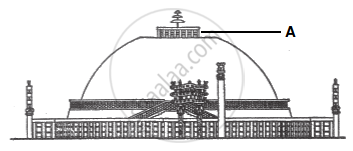
[4] Thinkers, Beliefs and Buildings: Cultural Developments
Chapter: [4] Thinkers, Beliefs and Buildings: Cultural Developments
Concept: undefined >> undefined

Which of the following statements regarding 'Nath' sect of Medieval India is NOT correct?

[6] Bhakti - Sufi Traditions: Changes in Religious Beliefs and Devotional Texts
Chapter: [6] Bhakti - Sufi Traditions: Changes in Religious Beliefs and Devotional Texts
Concept: undefined >> undefined

Which one of the following statement is correct?

[4] Thinkers, Beliefs and Buildings: Cultural Developments
Chapter: [4] Thinkers, Beliefs and Buildings: Cultural Developments
Concept: undefined >> undefined

'The Chistis became the most influential Sufi devotional tradition in the late twelfth century.' Explain the statement.

[6] Bhakti - Sufi Traditions: Changes in Religious Beliefs and Devotional Texts
Chapter: [6] Bhakti - Sufi Traditions: Changes in Religious Beliefs and Devotional Texts
Concept: undefined >> undefined
  1. On the given political outline map of India, locate and label the following with appropriate symbols:
    1. Sanchi - A Stupa
    2. Dholavira - A matured Harappan Site
      1. Shahjahanabad (Delhi) - Territory under the control of Mughals. 
      2. Golconda - An empire of 14th to 18th century. 
  2. On the same outline map, two places related with the centres of the Revolt of 1857 have been marked as 'A' and 'B'. Identify them and write their correct names on the lines drawn near them. 
    1. Calcutta
    2. Banaras

[4] Thinkers, Beliefs and Buildings: Cultural Developments
Chapter: [4] Thinkers, Beliefs and Buildings: Cultural Developments
Concept: undefined >> undefined

Ashoka erected a pillar at ______ to mark that he had visited that place.

[4] Thinkers, Beliefs and Buildings: Cultural Developments
Chapter: [4] Thinkers, Beliefs and Buildings: Cultural Developments
Concept: undefined >> undefined

Read the following statements carefully and identify the place where this Dargah is located from the given options.

  1. It is a Dargah of the Shaikh Moinuddin Chishti.
  2. Akbar visited this place many times.
[6] Bhakti - Sufi Traditions: Changes in Religious Beliefs and Devotional Texts
Chapter: [6] Bhakti - Sufi Traditions: Changes in Religious Beliefs and Devotional Texts
Concept: undefined >> undefined

Write a short essay (about 500 words) on the following:
To what extent does knowledge of Buddhist literature help in understanding the sculpture at Sanchi?

[4] Thinkers, Beliefs and Buildings: Cultural Developments
Chapter: [4] Thinkers, Beliefs and Buildings: Cultural Developments
Concept: undefined >> undefined

Answer in 100-150 words.

Describe the major teachings of either Kabir or Baba Guru Nanak, and the ways in which these have been transmitted. 

[6] Bhakti - Sufi Traditions: Changes in Religious Beliefs and Devotional Texts
Chapter: [6] Bhakti - Sufi Traditions: Changes in Religious Beliefs and Devotional Texts
Concept: undefined >> undefined

Answer in100-150 words

What are the problems in using the Ain as a source for reconstructing agrarian history? How do historians deal with this situation?

[8] Peasants, Zamindars and the State: Agrarian Society and the Mughal Empire
Chapter: [8] Peasants, Zamindars and the State: Agrarian Society and the Mughal Empire
Concept: undefined >> undefined

Answer In 100-150 words

Discuss the major features of Mughal provincial administration. How did the centre control the provinces?

[9] Kings and Chronicles: the Mughal Courts
Chapter: [9] Kings and Chronicles: the Mughal Courts
Concept: undefined >> undefined

Write a Short Essay (About 250-300 Words) on the Following:-

What were the distinctive features of the Mughal nobility? How was their relationship with the emperor shaped?

[9] Kings and Chronicles: the Mughal Courts
Chapter: [9] Kings and Chronicles: the Mughal Courts
Concept: undefined >> undefined

Write a short essay (250-300 words) on the following:

Examine the strengths and limitations of oral history. How have oral-history techniques furthered our understanding of Partition?

[14] Understanding Partition: Politics, Memories, Experiences
Chapter: [14] Understanding Partition: Politics, Memories, Experiences
Concept: undefined >> undefined

Given below are two statements, one labelled as Assertion (A) and the other labelled as Reason (R):

Assertion (A): There are limits to what epigraphy can reveal.
Reason (R): It is not always easy to be sure about the exact meaning of the words used in inscriptions.

[2] Kings, Farmers and Towns: Early States and Economies
Chapter: [2] Kings, Farmers and Towns: Early States and Economies
Concept: undefined >> undefined

Consider the following statements regarding Kabir.

  1. Kabir organised his followers into a community and set up rules for congregational worship.
  2. Kabir described the Ultimate Reality using terms drawn from Islam, Vedantic traditions, and from yogic traditions.
  3. Verses ascribed to Kabir have been compiled in three distinct but overlapping traditions.

Which of the following statements is/are incorrect?

[6] Bhakti - Sufi Traditions: Changes in Religious Beliefs and Devotional Texts
Chapter: [6] Bhakti - Sufi Traditions: Changes in Religious Beliefs and Devotional Texts
Concept: undefined >> undefined

Which of the following statements is NOT correct about Baba Guru Nanak?

[6] Bhakti - Sufi Traditions: Changes in Religious Beliefs and Devotional Texts
Chapter: [6] Bhakti - Sufi Traditions: Changes in Religious Beliefs and Devotional Texts
Concept: undefined >> undefined
< prev  781 to 800 of 862  next > 
Advertisements
Advertisements
CBSE Arts (English Medium) कक्षा १२ Question Bank Solutions
Question Bank Solutions for CBSE Arts (English Medium) कक्षा १२ Accountancy
Question Bank Solutions for CBSE Arts (English Medium) कक्षा १२ Business Studies
Question Bank Solutions for CBSE Arts (English Medium) कक्षा १२ Computer Science (Python)
Question Bank Solutions for CBSE Arts (English Medium) कक्षा १२ Economics
Question Bank Solutions for CBSE Arts (English Medium) कक्षा १२ English Core
Question Bank Solutions for CBSE Arts (English Medium) कक्षा १२ English Elective - NCERT
Question Bank Solutions for CBSE Arts (English Medium) कक्षा १२ Entrepreneurship
Question Bank Solutions for CBSE Arts (English Medium) कक्षा १२ Geography
Question Bank Solutions for CBSE Arts (English Medium) कक्षा १२ Hindi (Core)
Question Bank Solutions for CBSE Arts (English Medium) कक्षा १२ Hindi (Elective)
Question Bank Solutions for CBSE Arts (English Medium) कक्षा १२ History
Question Bank Solutions for CBSE Arts (English Medium) कक्षा १२ Informatics Practices
Question Bank Solutions for CBSE Arts (English Medium) कक्षा १२ Mathematics
Question Bank Solutions for CBSE Arts (English Medium) कक्षा १२ Physical Education
Question Bank Solutions for CBSE Arts (English Medium) कक्षा १२ Political Science
Question Bank Solutions for CBSE Arts (English Medium) कक्षा १२ Psychology
Question Bank Solutions for CBSE Arts (English Medium) कक्षा १२ Sanskrit (Core)
Question Bank Solutions for CBSE Arts (English Medium) कक्षा १२ Sanskrit (Elective)
Question Bank Solutions for CBSE Arts (English Medium) कक्षा १२ Sociology
Share
Notifications

Englishहिंदीमराठी


      Forgot password?
Use app×