Advertisements
Advertisements
If 1 gram of each of the following gases are taken at STP, which of the gases will occupy (a) greatest volume and (b) smallest volume?
\[\ce{CO, H2O, CH4 , NO}\]
Concept: undefined >> undefined
Value of universal gas constant (R) is same for all gases. What is its physical significance?
Concept: undefined >> undefined
Advertisements
Compressibility factor, Z, of a gas is given as Z = `(pV)/(nRT)`. What is the value of Z for an ideal gas?
Concept: undefined >> undefined
Compressibility factor, Z, of a gas is given as Z = `(pV)/(nRT)`. For real gas what will be the effect on value of Z above Boyle’s temperature?
Concept: undefined >> undefined
Pressure versus volume graph for a real gas and an ideal gas are shown in figure. Answer the following questions on the basis of this graph.
(i) Interpret the behaviour of real gas with respect to ideal gas at low pressure.
(ii) Interpret the behaviour of real gas with respect to ideal gas at high pressure.
(iii) Mark the pressure and volume by drawing a line at the point where real gas behaves as an ideal gas.
Concept: undefined >> undefined
Match the following graphs of ideal gas with their co-ordinates:
| Graphical representation | x and y co-ordinates |
(i) 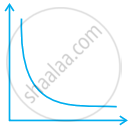 |
(a) pV vs. V |
(ii) 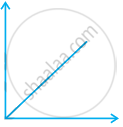 |
(b) p vs. V |
(iii) 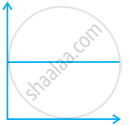 |
(c) p vs. `1/V` |
Concept: undefined >> undefined
Assertion (A): At constant temperature, pV vs V plot for real gases is not a straight line.
Reason (R): At high pressure all gases have \[\ce{Z}\] > 1 but at intermediate pressure most gases have \[\ce{Z}\] < 1.
Concept: undefined >> undefined
Isotherms of carbon dioxide gas are shown in figure. Mark a path for changing gas into liquid such that only one phase (i.e., either a gas or a liquid) exists at any time during the change. Explain how the temperature, volume and pressure should be changed to carry out the change.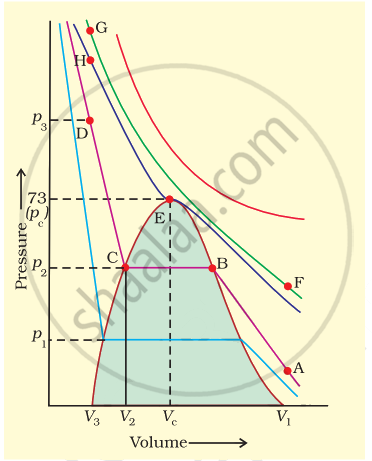
Concept: undefined >> undefined
Enthalpy is an extensive property. In general, if enthalpy of an overall reaction A→B along one route is ∆rH and ∆rH1, ∆rH2, ∆rH3 ..... represent enthalpies of intermediate reactions leading to product B. What will be the relation between ∆rH for overall reaction and ∆rH1, ∆rH2 ..... etc. for intermediate reactions.
Concept: undefined >> undefined
The difference between CP and CV can be derived using the empirical relation H = U + pV. Calculate the difference between CP and CV for 10 moles of an ideal gas.
Concept: undefined >> undefined
The enthalpy of vapourisation of \[\ce{CCl4}\] is 30.5 kJ mol–1. Calculate the heat required for the vapourisation of 284 g of \[\ce{CCl4}\] at constant pressure. (Molar mass of \[\ce{CCl4}\] = 154 g mol–1).
Concept: undefined >> undefined
Draw the gas phase and solid phase structure of \[\ce{H2O2}\].
Concept: undefined >> undefined
Write the Lewis structure of hydrogen peroxide.
Concept: undefined >> undefined
How will you concentrate \[\ce{H2O2}\]? Show differences between structures of \[\ce{H2O2}\] and \[\ce{H2O}\] by drawing their spatial structures. Also mention three important uses of \[\ce{H2O2}\].
Concept: undefined >> undefined
A colourless liquid ‘A’ contains H and O elements only. It decomposes slowly on exposure to light. It is stabilised by mixing urea to store in the presence of light. Suggest possible structure of A.
Concept: undefined >> undefined
An alkane C8H18 is obtained as the only product on subjecting a primary alkyl halide to Wurtz reaction. On monobromination this alkane yields a single isomer of a tertiary bromide. Write the structure of alkane and the tertiary bromide.
Concept: undefined >> undefined
Use Bohr's postulate to prove that the radius of nth orbit in a hydrogen atom is proportional to n2.
Concept: undefined >> undefined
The increasing order of reactivity among group 1 elements is Li < Na < K < Rb <Cs whereas that among group 17 elements is F > CI > Br > I. Explain.
Concept: undefined >> undefined
The first (Δ1H1) and the second (Δ1H2) ionization enthalpies (in kJ mol-1) and the (ΔegH) electron gain enthalpy (in kJ mol-1) of a few elements are given below:
| Elements | Δ1H1 | Δ1H2 | ΔegH |
| I | 520 | 7300 | -60 |
| II | 419 | 3051 | -48 |
| III | 1681 | 3374 | -328 |
| IV | 1008 | 1846 | -295 |
| V | 2372 | 5251 | +48 |
| VI | 738 | 1451 | -40 |
Which of the above elements is likely to be the least reactive element.
Concept: undefined >> undefined
The first (Δ1H1) and the second (Δ1H2) ionization enthalpies (in kJ mol-1) and the (ΔegH) electron gain enthalpy (in kJ mol-1) of a few elements are given below:
| Elements | Δ1H1 | Δ1H2 | ΔegH |
| I | 520 | 7300 | -60 |
| II | 419 | 3051 | -48 |
| III | 1681 | 3374 | -328 |
| IV | 1008 | 1846 | -295 |
| V | 2372 | 5251 | +48 |
| VI | 738 | 1451 | -40 |
Which of the above elements is likely to be the most reactive metal.
Concept: undefined >> undefined
