Advertisements
Advertisements
प्रश्न
The value of the universal gas constant depends upon
विकल्प
Temperature of the gas
Volume of the gas
Number of moles of the gas
Units of pressure and volume
Advertisements
उत्तर
Units of pressure and volume
APPEARS IN
संबंधित प्रश्न
Maximum deviation from ideal gas is expected from
Can a Van der Waals gas with a = 0 be liquefied? explain.
Suppose there is a tiny sticky area on the wall of a container of gas. Molecules hitting this area stick there permanently. Is the pressure greater or less than on the ordinary area of walls?
Which of the following gases would you expect to deviate from ideal behavior under conditions of low-temperature F2, Cl2, or Br2? Explain.
A plot of volume (V) versus temperature (T) for a gas at constant pressure is a straight line passing through the origin. The plots at different values of pressure are shown in Figure. Which of the following order of pressure is correct for this gas?
If 1 gram of each of the following gases are taken at STP, which of the gases will occupy (a) greatest volume and (b) smallest volume?
\[\ce{CO, H2O, CH4 , NO}\]
Value of universal gas constant (R) is same for all gases. What is its physical significance?
Compressibility factor, Z, of a gas is given as Z = `(pV)/(nRT)`. What is the value of Z for an ideal gas?
Match the following graphs of ideal gas with their co-ordinates:
| Graphical representation | x and y co-ordinates |
(i) 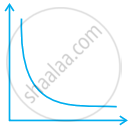 |
(a) pV vs. V |
(ii)  |
(b) p vs. V |
(iii)  |
(c) p vs. `1/V` |
Assertion (A): At constant temperature, pV vs V plot for real gases is not a straight line.
Reason (R): At high pressure all gases have \[\ce{Z}\] > 1 but at intermediate pressure most gases have \[\ce{Z}\] < 1.
