Advertisements
Advertisements
प्रश्न
Refer to the diagram given below and answer the questions that follow.
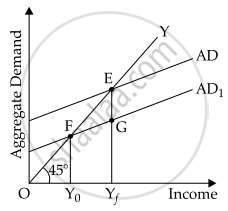
- What does the gap EG represent? Explain. [2]
- Recommend any two fiscal measures and any two monetary measures to combat the situation referred to in subpart (a). [4]
स्पष्ट कीजिए
Advertisements
उत्तर
a. A negative gap is shown by the gap EG. The deflationary gap is the difference between the current level of full employment and the level of aggregate demand. Deflationary means that prices keep going down, which is what the term means.
b. Recommendations to combat the deflationary gap:
- Fiscal Measures:
- Decrease in Taxes: The government may cut taxes to close the downward gap. A lot of people may be able to buy more things because of this, which could raise the Aggregate. There needs to be equal Demand and Supply in the business.
- Increase in Government Expenditure: The government may spend more in order to close the declining gap. People can make more money because of it. The people may be able to buy more things because of this, which could raise the economy’s aggregate demand until it equals its aggregate supply.
- Monetary Measures:
- Bank rate: Deflation means that prices are falling too slowly. To make up for it, the Central Bank lowers the bank rate. When bank rates go down, commercial banks can print more money, and the market interest rate goes down, too. This makes people want to borrow more. There is no longer any decline because total demand goes up.
- Open Market Operations (OMO): When demand isn’t sufficient to support prices, leading to deflation, the Central Bank buys government securities and other assets from a Commercial Bank. By buying these stocks, Commercial Bank will be able to give out more loans, which will keep demand in check.
shaalaa.com
क्या इस प्रश्न या उत्तर में कोई त्रुटि है?
2024-2025 (March) Official Board
