Advertisements
Advertisements
प्रश्न
Read the poem and write -
Give four examples. Pick the lines from the poem.
Assonance:
(1)
(2)
(3)
(4)
Advertisements
उत्तर
- Pass into nothingness; but still will keep A bower quiet for us, and a sleep
- A flowery band to bind us to the earth, Spite of despondence, of the inhuman dearth
- Of noble natures, of the gloomy days, Of all the unhealthy and o’er-darkened ways
- From our dark spirits. Such the sun, the moon, Trees old, and young, sprouting a shady boon
APPEARS IN
संबंधित प्रश्न
Read the following extract and do the given activities :
A1. Fill in the web with what passion poesy can do to you: (2)

…...................and clear rills
That for themselves a cooling covert make
‘Gainst the hot season; the mid forest brake,
Rich with a sprinkling of fair musk-rose blooms :
And such too is the grandeur of the dooms
We have imagined for the mighty deed;
All lovely tales that we have heard or read
An endless fountain of immortal drink
Pouring unto us from the heaven’s brink.
Nor do we merely feel these essences
For one short hour; no, even as the trees
That whisper round a temple become soon
Dear as the temple’s self, so does the moon,
The passion poesy, glories infinite,
Haunt us till they become a cheering light
Unto our souls, and bound to us so fast,
That, whether there be shine, or gloom o’ercast
They always must be with us, or we die.
A2. List the things which express sorrow from the extract. (2)
A3. Write down the rhyme scheme of the last five lines. (1)
Make a list of 10 words related to the word ‘joy’, for example, happiness.
1.____________
2.____________
3.____________
4.____________
5.____________
6.____________
7.____________
8.____________
9.____________
10.____________
Recollect a picnic or a trip to a spot of natural beauty (a hill station/ a beach/forest area etc.) when you were younger.
Write four beautiful unforgettable scenes that left a deep impact on you.
1.__________________
2.__________________
3.__________________
4.__________________
‘Meter’ in poetry is a pattern of stressed and unstressed syllables in lines of a poem. It gives rhythm to the poem.
Read the poem below aloud and with any coloured pen/ pencil put stress-marks ( ) on those syllables that are stressed in the words of the poetic lines
THE steadfast coursing of the stars,
The waves that ripple to the shore,
The vigorous trees which year by year Spread upwards more and more ;
The jewel forming in the mine, The snow that falls so soft and light,
The rising and the setting sun,
The growing glooms of night,
All-natural things both live and move In natural peace that is their own ;
Only in our disordered life Almost is she unknown.
Read the poem and fill in the table.
| Sr.No. | Expressions of Beauty (joy) | Expressions of sorrow |
| 1 | ||
| 2 | ||
| 3 | ||
| 4 | ||
| 5 | ||
| 6 |
Answer in your own word.
What does a thing of beauty keep in store, for us?
Pick out and rewrite 5 lines that contain Imagery.
(a)
(b)
(c)
(d)
(e)
Go through the poem again and write in your notebook an appreciation of the poem in the paragraph format.
Read the following extract and do the given activities.
A1. Match the following words from Cloud 'A' with Cloud 'B':
| Cloud 'A' | Cloud 'B' |
| (a) A thing of beauty | (i) of immortal drink |
| (b) Endless fountain | (ii) rich with rose blooms |
| (c) Hot season | (iii) is a joy forever |
| (d) Sleep full of | (iv) sweet dreams |
|
A thing of beauty is a joy for ever: - John Keats |
A2. List any two things of beauty in the poem.
A3. List any two things that cause suffering and pain.
Read the following extract and do the given activities:
|
A thing of beauty is a joy for ever : Full of sweet dreams, and health and quiet breathing. Of noble natures, of the gloomy days, From our dark spirits. Such the sun, the moon, That for themselves a cooling covert make |
(A1) Complete the web: (2)
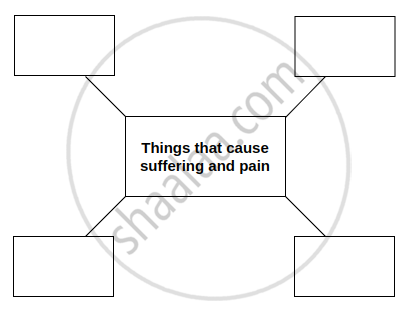
(A2) List down two impacts of beautiful things on us: (2)
- _______
- _______
(A3) Write down the Rhyme - scheme of the first four lines. (1)
