Advertisements
Advertisements
प्रश्न
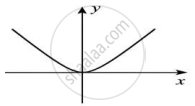
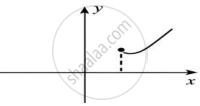
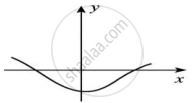
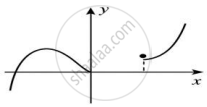
Observe the following graphs (a), (b), (c) and (d), each representing different types of functions.
 |
 |
| (a) | (b) |
 |
 |
| (c) | (d) |
Statement 1: A function which is continuous at a point may not be differentiable at that point.
Statement 2: Graph (c) is an example of a function that is continuous but not differentiable at the origin.
Which of the following is correct?
विकल्प
Statement 1 is true and Statement 2 is false.
Statement 2 is true and Statement 1 is false.
Both the statements are true.
Both the statements are false.
Advertisements
उत्तर
Statement 1 is true and Statement 2 is false.
Explanation:
Statement 1: A function which is continuous at a point may not be differentiable at that point.
This is true.
For examples,
f(x) = |x| is continuous at x = 0
But not differentiable at x = 0
A function with a sharp corner or cusp is continuous but not differentiable.
So Statement 1 is true.
Statement 2: Graph (c) represents a function that is continuous but not differentiable at the origin.
This is false because in graph (c) the curve passes through the origin smoothly. There is no sharp corner, cusp, vertical tangent, or sudden change in direction at x = 0.
So the left-hand slope and right-hand slope at the origin are the same, meaning the function is differentiable at the origin.
Therefore, graph (c) is not an example of continuous but not differentiable at the origin, so Statement 2 is false.
