Advertisements
Advertisements
प्रश्न
Explain the different steps carried out in Polymerase Chain Reaction, and the specific roles of the enzymes used.
स्पष्ट कीजिए
Advertisements
उत्तर
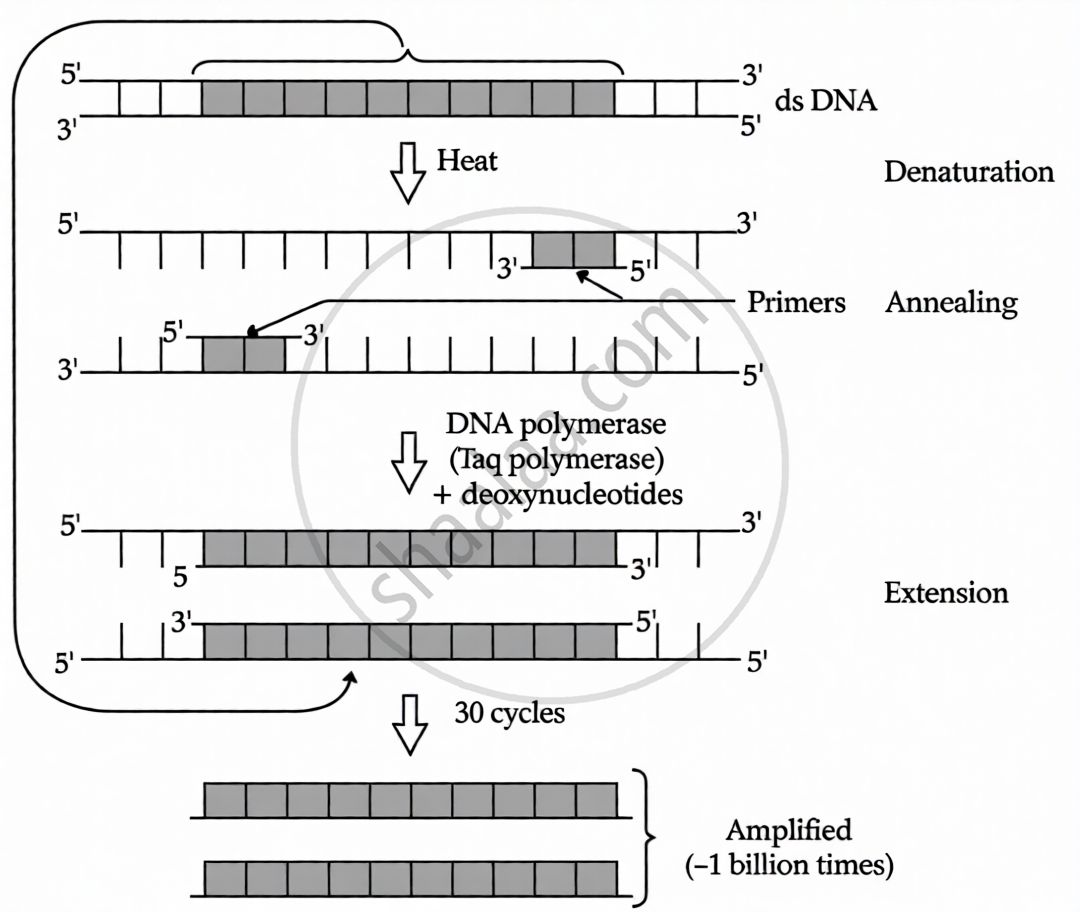
Polymerase Chain Reaction (PCR) is a molecular biology process that multiplies a gene or DNA to produce many copies. Each cycle has three steps:
- Denaturation: It occurs when double-stranded DNA molecules are heated to (94°C), causing the two strands to split and form a single stranded DNA molecule. This process is known as denaturation. Each strand serves as a template for DNA synthesis.
- Annealing: The two oligonucleotide primers anneal (hybridize) to each single-stranded DNA template, as their sequences are complementary to the template DNA’s 3’ ends. This step is performed at a lower temperature based on the length and sequence of primers. This causes duplication of the original DNA molecule.
- Extension of primers: DNA polymerase (Taq polymerase) expands primers with nucleotides delivered in the process. The optimal temperature for this polymerization stage is 72°C. Repeating this method numerous times yields multiple copies of the rDNA fragment. The enzyme in PCR is thermostable. Taq polymerase enzyme derived from the bacteria Thermus aquaticus.
shaalaa.com
क्या इस प्रश्न या उत्तर में कोई त्रुटि है?
2019-2020 (March) Delhi Set 1
