Advertisements
Advertisements
प्रश्न
‘An oyster turns a grain of sand into a pearl.’ What can we learn from this example?
Advertisements
उत्तर
We can learn from the oyster that something ordinary, like a grain of sand, can be transformed into something beautiful and valuable, like a pearl, with time and perseverance. This implies that difficulties can be opportunities for growth.
APPEARS IN
संबंधित प्रश्न
Read the following passage and do the activities.
We have a hibiscus plant in our garden. Every fortnight a flower blooms on it - big, bright and tender. Through the day it smiles with the sun and dances with the wind, but as evening approaches, it starts wilting. The morning after, it withers completely and by evening it falls and becomes one with the earth again. The flower comes to life only for a day, yet it does so in full splendour. What if we too lived our life, however short, to its fullest?
We went to a rocky beach and saw the spread of the majestic ocean and the rocks alongside, carved, sculpted and shaped by the water. Water is so gentle, rock so hard, yet, as the water flows over it every day, for years, the rock gives in. It takes the shape that the water commands. Our problems are so colossal and we are so small, yet if we persist...
We saw small bits of grass peeping through the small cracks in a concrete pavement. It left us thinking: however impossible things may look, there is always an opening...
We saw a tree bare of all leaves in the cold winter months. We thought its chapter was over. But three months passed, spring set in and the tree was back to its green majesty once again, full of leaves, flowers, birds and life. What if we too had the conviction that, however difficult things are right now, it will not remain so for ever. Remember, this too shall pass.
(A1) Rewrite the following sentences in proper sequence. 02
(a) It starts wilting.
(b) Through the day, it smiles with the sun.
(c) It withers completely.
(d) Every fortnight a flower blooms.
(A2) Complete the following sentences. 02
(1) Our problems are ……………………….. .
(2) However impossible things may look ………………………………………..
(A3) Match the columns. 02
| A | B |
| (1) Drying and drooping | (a) Conviction |
| (2) Huge, massive | (b) Splendour |
| (3) Grandeur | (c) Colossal |
| (4) Firm belief | (d) Wilting |
(A4) (1) Do as directed. 02
(a) We went to the rocky beach and saw the spread of the majestic ocean. (Begin with ‘After going to….’)
(b) We have a hibiscus plant in our garden. (Write a question to which the underlined word is the answer).
(A5) What role does nature play in our lives? 02
What things in nature teach us the following:
Be humble and adjust.
What things in nature teach us the following:
Be persistent
Read the question from the lesson. What do they imply?
What if we too had lived our lives, however short, to the fullest?
Go through the lesson again and complete the flow-chart that highlights the life of a ‘hibiscus’ flower.
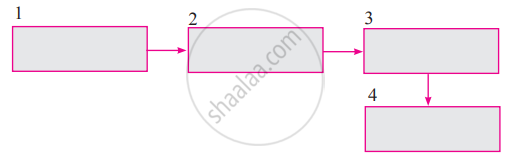
How does nature succeed in its ‘Alchemy’? What can it turn a small person into?
Prepare a Fact file of any of the following plants / trees, using the points given.
[coconut / neem / basil / cactus / apple]
- Name of Plant / Tree .................
- Scientific name .................
- Region and climate .................
- Features .................
- Growth .................
- Size, shape and colour .................
- Uses .................
- Any special feature .................
Look at the following thing. Discuss with your friend, what you learn from them.
A bee
Look at the following things. Discuss with your friend, what you learn from them.
Rainfall
Look at the following things. Discuss with your friend, what you learn from them.
Sun
