Advertisements
Advertisements
प्रश्न
Account for the following.
Although amino group is o- and p-directing in aromatic electrophilic substitution reactions, aniline on nitration gives a substantial amount of m-nitroaniline.
Advertisements
उत्तर
Nitration is usually carried out with a mixture of conc. HNO3 and conc. H2SO4. In the presence of these acids, most of the aniline gets protonated to form an anilinium ion. Therefore, in the presence of acids, the reaction mixture consists of aniline and anilinium ions.
Now –NH2, a group in aniline is O, P-directing and activating while the –NH3 group is anilinium ion is meta-directing and deactivating. Whereas nitration of aniline (due to steric hindrance at o-position) mainly gives p-nitroaniline, the nitration of anilinium ion gives m-nitro aniline. In actual practice, approximately a 1 : 1 mixture of P and m-nitro aniline is formed.

APPEARS IN
संबंधित प्रश्न
What is the action of nitrous acid on the following compounds?
Isopropyl amine
Which of the following amines is most basic in nature in aqueous phase?
The order of basic strength for methyl substituted amines in aqueous solution is ____________.
Account for the following.
Ethylamine is soluble in water whereas aniline is not.
Arrange the following.
In decreasing order of basic strength in gas phase (C2H5)NH2, (C2H5)NH, (C2H5)3N and NH3.
The following amine can be classified as:

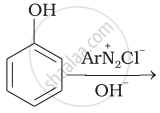
Complete the following reaction.
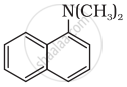
Classify the following amine as primary, secondary or tertiary:
Write a short note on the following.
Ammonolysis
Account for the following:
Aniline does not undergo Friedel-Crafts reaction.
